

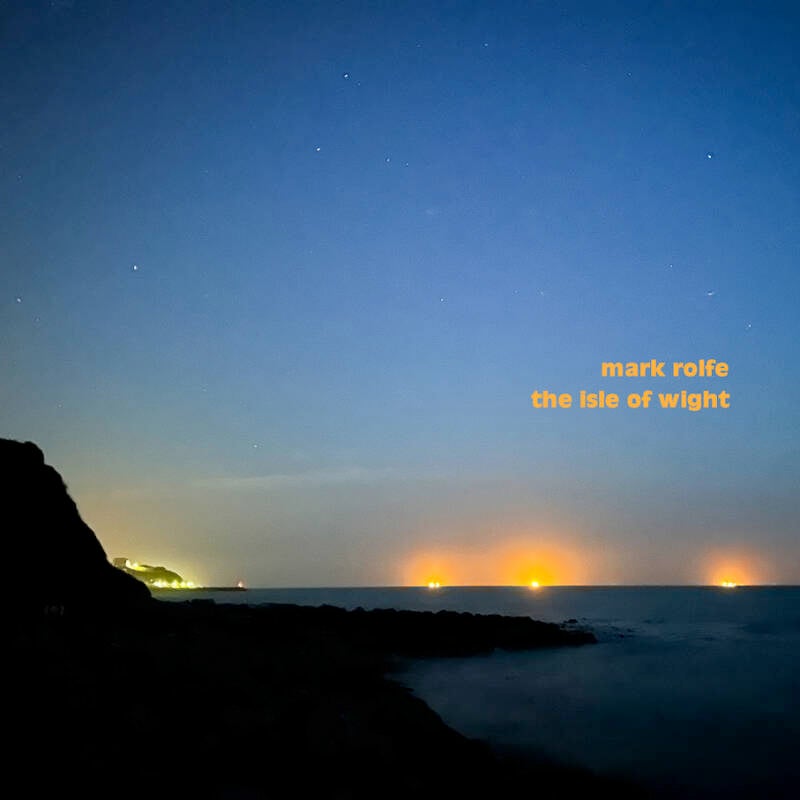
You’ve described yourself as a long-time visitor and passionate advocate of the Isle of Wight. What first drew you to the island, and how has your relationship with it evolved over the years?
Hello! I’ve been visiting the island since I was a child. Every summer holds perfect seaside memories or endless summers. I’ve watched it grow, develop, fall, and resurrect as a place of natural beauty, arts and culture.
This album feels like a deeply personal love letter to the Isle of Wight’s landscapes. Were there particular memories, visits, or moments on the island that sparked the idea for the project?
It’s a very autobiographical album. The island has been there for me as a very young child, a teenager, and in my early twenties when I first met my wife. It was actually the first trip we ever took together. And now, it is very much the "me" in my later life. There is music, memory, and inspiration right from the late seventies up to last summer. It is just a feeling of peace, nature, connection, memory and place.
You incorporate field recordings captured directly from the island’s coastline, countryside, and ecosystems. How did you approach gathering those sounds, and what challenges or special moments came up during recording?
It was very basic. I’ve always been interested in recording sounds and actually made some field recordings on the island back in 2002 on a dictaphone. I wish I knew where those were now. These days, with an iPhone, I can record things instantly without having to plan it. I take the recordings back to the studio, clean them up, and send them through the same sonics and textures as the instruments.
The Isle of Wight blends ambient, ethereal, contemporary classical, and pastoral elements with guitars, strings, voice, analogue synths, and pedal steel. How did you decide on this sonic palette, and what role did each contributor (like Sharon Cohen Rolfe on voice or the string players) play?
I love this question. I enjoy playing with different instruments and always write a lot for guitar, strings, and brass. But a constant is always my love of classic analogue synths and dreamy guitars, so they were always going to feature. I knew I wanted to involve Sharon’s voice straight away as she feels like the overarching highlight of the songs, once I put those in the album went to a next level. Maddy is in Lorna with me and I love her playing so much. When I write for her, I can picture how she is going to approach it immediately. She is a hugely gifted studio musician. Iain is a great friend and lives locally to me. He is a stunning orchestral player with a knowledge of string music which is unbelievable, he is so open minded to experimentation and trying new things too. An incredible guy to work with.
The album is structured as a cinematic journey through specific locations (Culver Down, Shanklin Chine, Compton Bay, etc.). Did you compose with a narrative or “walk” through the island in mind, or did the track order come together later?
I love that idea. When compiling the playlist, I did consider seeing if I could make it work geographically, like a musical walk around the coastal path, but it didn’t quite work. However, in Culver Down (track one), there is an overarching sense of sunrise, and in the last track (Brading Down), it feels very much like a setting sun.
Tracks like “Shanklin Chine” and “Compton Bay” have been highlighted for their immersive, meditative quality. Can you walk us through the creation of one of those pieces - from initial idea to final recording?
Compton Bay was one of the first songs I wrote that week. I knew that I wanted to mix chordal tones featuring notes very close together juxtaposed with a melody that had a lot of space and distance, the land and the sea. I started with the chord tones first and the really dense texture of synths, then just let the spacey melodies flow on top of that. I knew I wanted to put a big, long, drawn out pedal steel over the top, and my long time collaborator, Nick Zala, who is best known for his work with Mojave 3, was the perfect man for the job as always. An amazing player.
You have a rich background as a multi-instrumentalist, producer (including work with Teenage Fanclub), band member in Lorna, and educator. How do those experiences influence the way you approached this solo ambient project?
I’ve only ever worked on Teenage Fanclub tribute albums and projects. I have such a deep love for their writing and their ethos on being a musician, their attitude has always inspired me. I miss the input of Gerry Love very much though Working on this album wasn’t too dissimilar to how we work with Lorna, as the texture and the soundscapes are always king.
The album is atmospheric, haunting, beautiful, and rewarding for listeners who give it patience and attention. What do you hope people feel or experience when they listen to The Isle of Wight from start to finish?
Well, first of all, if they don’t know anything about the island, I hope it would encourage them to find out more and perhaps plan a visit. As for the music, I just hope it helps them feel restored and serves as a reminder that it is a beautiful planet.
There’s a strong sense of place, memory, and tranquility in the work. Are there broader themes — such as nature, escapism, or reflection — that you wanted to explore through these soundscapes?
Yes, all of those. I think, first of all, reflection is the most important tool for any composer. Our music is us, and we are our own reflections. I am always reflecting on past writing, trying to learn from it, trying to improve, and trying not to repeat myself while also finding out what are the things I can do well to build on.
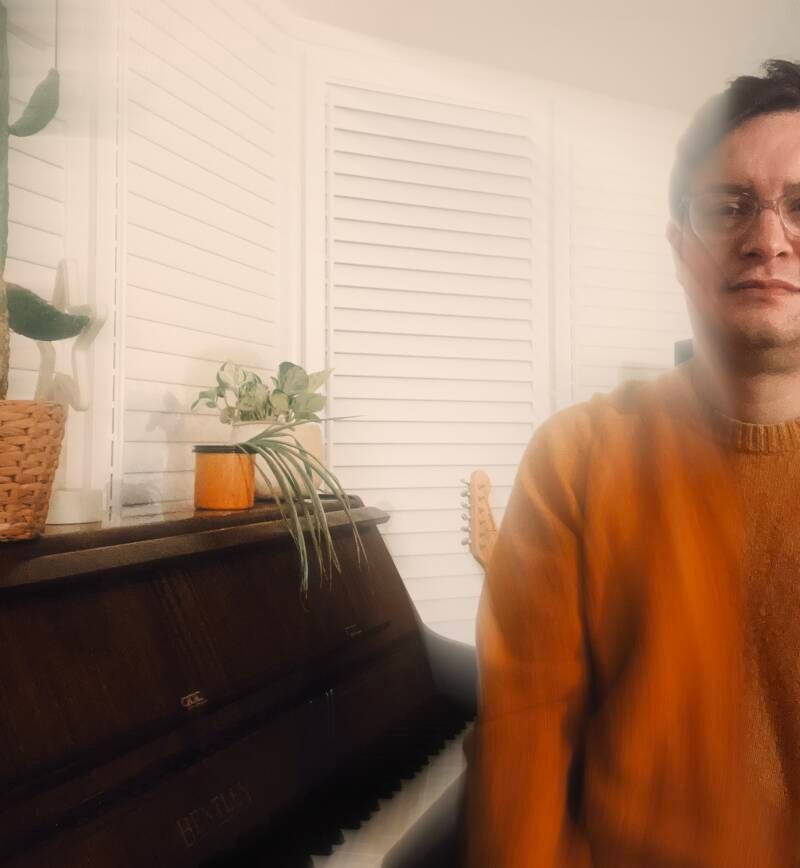
How does this album fit into your wider discography, including your Ambient Star Wars volumes and other releases? Is it a departure, or part of an ongoing exploration of certain styles?
I’ve made ambient music as a side project for around 20 years now, but I never really did anything with the recordings. They were just for me, and it was a separate side to being in Lorna. Over the last few years, I’ve gone back and decided I want to give them all a second lease of life. I was starting to remaster some of my old ambient pieces last summer when I just decided to stop and write some new music instead.
The album is available on vinyl, CD (with limited edition postcards featuring your photography), and digital. What was important to you about the physical releases and the artwork?
The artwork was extremely important and evolved from photographs I’ve taken on the island over the last 10 years. Having a physical release really allows the artwork to play a larger role. I think the art and music in this album are both really important to each other.
You have live dates coming up, including on the Isle of Wight itself. What can audiences expect from a live performance of this album, especially with photography and projections?
I am trying to do as much live as possible. I started out in January learning how I could replicate the parts as one person. I will have to use some tapes and clicks, but I have really developed my skills in using a live loop pedal and looping live in Logic, which is my choice of DAW. For the Nottingham show, I have Iain and Maddy helping out, and I am hopeful that Sharon can join us on the Isle of Wight. The shows will absolutely be set to a film of moving and static photography. It is all combined.
Are there any particular Isle of Wight spots or experiences you’d recommend to listeners who want to connect more deeply with the places featured on the album?
There are always three that spring to mind.
Freshwater Bay is such a hub of beauty, community, and history. It has a great vibe but remains incredibly traditional.
The entire stretch of Military Road from Freshwater to Ventnor is something I always recommend to every visitor. Try and walk as much of it as possible.
The town of Sandown is a rundown, forgotten bucket and spade town, left behind and somewhat desolate these days. But it has an amazing spirit and a community of people fighting back and bringing it back, and I feel the arts have played a huge role in that.
What’s next for you musically after The Isle of Wight - more location-inspired works, collaborations, or something entirely different?
I would like to try and record a live version of the album and maybe a second volume. There is a new Lorna album on the way and I am desperate to make more music with my indie rock band, The Slow Return. It consists of two of my best friends and we all share the songwriting. We just never seem to be able to coordinate time, but I feel we have a lot more songwriting to share. I love creating with them. I am also getting more and into working with media and have been increasing my portfolio for screen. At the moment, I am scoring a film by an outstanding young filmmaker based in Pennsylvania. She has such a strong vision and such clear, strong ideas, which is making me learn a lot. And I love learning!
Add comment
Comments