

Outside Pedestrian provides unconventional music for an unconventional world. "Drawbridge" is their latest creation, a seemingly simple instrumental jazz-rock tune that subverts genre norms by getting each instrument to behave unpredictably. We recently had the opportunity to discuss this release with them.
"Drawbridge" came out on March 17, 2026, as your first release since the 2024 album Time Zones. What sparked this particular track, and how does the title capture what listeners experience in the song?
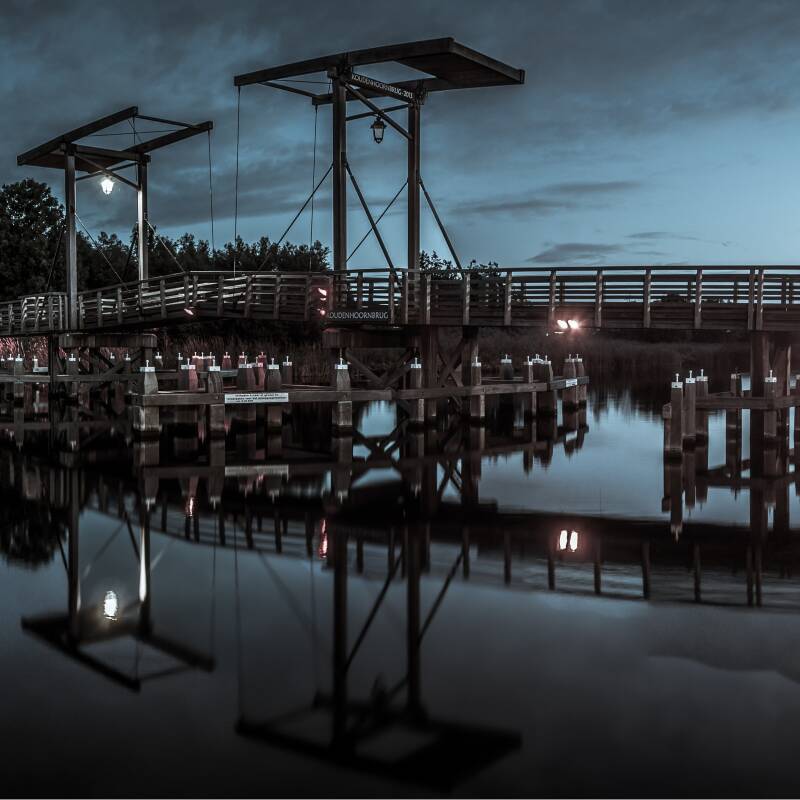
The tune started off with a guitar riff created by Anthony Fesmire, and was then fleshed out by both him and David Lockeretz. Drawbridges are associated with movement and transportation - the bridge itself, and the ships that go under it - and the concept of forward motion is an important one in music.
Many reviews praise how the song subverts expectations and refuses to stay in one place. Was that sense of controlled chaos intentional from the start, or did it emerge during the writing and recording process?
We’re always going for a sort of “controlled chaos” - we want the music to feel energetic and exciting (chaotic) but also make sense (controlled). How we do this might vary from tune to tune, but in general, the approach is to start with, “what DON’T we want to do?” We don’t want to do something that we feel like we’ve done before or that will be predictable to the listener. In a way it becomes a process of elimination. “Well, we’ve already done A, B, C, D and E before, so let’s try F.”
Anthony, your guitar playing moves fluidly between smooth jazz lines, expressive slides, micro-bends, and sharper rock/metal edges. What were you going after sonically or emotionally on this track?
Artistically with Outside Pedestrian I am always thinking both as a guitarist and composer. Many of the sonic choices from the guitarist perspective grow out of choices within the direction of the composition. For example, the opening section of “Drawbridge”, with the hard driving octaves in the guitar and counterpoint with the bass called for a distorted and edgy rock tone. The second section mellows and incorporates a cleaner tone more characteristic of jazz. As the composers for the band, both David Lockeretz and I draw from a wide pallet of stylistic influences which really drives the emotional edge and sense of the unexpected in our music.
David Lockeretz, the bass functions as a true melodic partner rather than just foundation. How did you approach the dialogue with Anthony’s guitar on "Drawbridge"?
In a trio with only two melodic instruments, the role of the bass as a melodic voice, not just a foundation, becomes more important. Jaco Pastorius is a big influence on me, in particular his work with Joni Mitchell, where his bass functions both as a supporting instrument and as a melodic instrument, complimenting her vocals. When the bass switches back and forth between roles like that, it forces the bassist to be economical with the melodic lines, and it gives the actual bass line shape with space. I’m also influenced by J.S. Bach, in particular the two-part inventions, where the roles of the left hand (bass) and right hand (treble) are interchangeable.
David Oromaner, your drumming brings together jazz swing, polyrhythms, rock energy, and great use of space. How did you shape the dynamics and elasticity that keep the track feeling alive and surprising?
Most of the elements are already in place when we do remote recordings, so in terms of the drum parts, my job is really to elevate what’s already there. I lean on stylistic knowledge and instincts built from playing jazz, rock, and more rhythmically layered music to shape the dynamics in a way that feels natural to the track.
A lot of it comes down to listening closely to the phrasing and emotional movement of the song, then deciding when to push forward, when to pull back, and when to leave space. I like using dynamics and subtle rhythmic shifts almost conversationally, so the groove keeps breathing and evolving instead of sitting in one place the whole time. In the case of Drawbridge you can hear an example of those subtle shifts in the bass drum pattern and the use of the bell cymbal. That elasticity is what helps keep the track feeling alive and a little unpredictable without losing the pocket.
With band members spread across different time zones (California and Massachusetts), what does the remote collaboration process look like for a complex instrumental like this? Any challenges or unexpected advantages?
Having done the remote recording process now for a while - the whole “Time Zones” album plus a few remakes of older tunes and an original arrangement of “Jesu, Joy of Man’s Desiring” by J.S. Bach - it’s starting to feel more comfortable. Doing stuff by email still isn’t quite the same as being in the same room developing ideas, but it’s nice to not have to worry about scheduling rehearsals or recording sessions, finding days and times that work for everyone, and it’s nice to not have to worry about a clock ticking while we’re working.
You’ve been making music together for over 25 years since meeting at Berklee. How has the band’s approach to composition and interplay evolved from your earlier albums like Sunless City or Reclaimed to something like "Drawbridge"?
The first album, “Pedestrian Crossing” had some rock and funk influence but it was basically a jazz album. Many of the tunes followed the format of “melody, then improvisation, then melody again.” On “Sunless” and “Reclaimed” we staked out some new territory; there was more use of odd time signatures and other progressive rock devices, some contrapuntal writing, some stuff that was influenced by minimalism, some longer forms that were more unconventional. With “Time Zones” the song forms continued to be more elaborate, often going through several different styles or grooves in a short time. The average length of the tracks on “Time Zones” is shorter than it is on any of the previous albums, but more information is packed into each one. There are improvised solos, but the emphasis is more on the composition and taking it to unexpected places. That is the direction that we are continuing to go as we work on #5. By this point, having done four albums as Outside Pedestrian (plus a pair of solo albums each and one album by our all-acoustic side project Sons of the Mellow Mafia) it’s challenging to keep coming up with new stuff. With “Drawbridge” we weren’t necessarily going for something completely radical that had never been heard before, but we tried some things that were a little unusual, such as a quiet drum solo and a loud bass solo and ending on an augmented chord.
The band name came from a memorable recording session at a prison facility with its “inside pedestrian” and “outside pedestrian” gates. Does that origin story still resonate with the spirit of the band today?
It’s always kind of amusing to tell the story, but apart from that, the name “Outside Pedestrian” is a reminder that our goal is to stay “outside” of expectations, predictability and the like.
There’s a performance video of "Drawbridge". How does this track translate to a live setting when you’re all in the same room, and what’s the energy like onstage?
We haven’t had a chance to play “Drawbridge” live yet, but based on experiences with the tracks on the “Time Zones” album which were all first recorded remotely and performed live afterward, the live setting seems more flexible; we are not locked into a click or a pre-determined arrangement. Having an audience to interact with is always rewarding; our remote recordings are a good way of showing people what we’re doing when we don’t have the opportunity to play the tunes live, but being able to do it in person makes the experience fulfilling on a different level. And being in the same room as each other when we’re playing - something we don’t get to do all that often, being spread out across the country - is always fun and exciting, and it adds to the energy. With live performances too, there’s also the need to accept that things won’t always be perfect. Of course you want to sound as good as you can, but it's also important to be able to let things go and move on.
What do you hope people take away from listening to "Drawbridge" — a feeling, a mood, an idea?
We hope that the listener feels like they’ve taken an interesting, unpredictable journey; we hope their expectations have been defied. A lot of times, instrumental rock is built around the guitar solo; the climax of the solo is usually the climax of the whole piece. In jazz, the typical format is to play the melody that the composer wrote, improvise on the harmonies and play the melody again. The form of “Drawbridge” is less standardized; after the main melody, the first soloist is the drums, over a quieter, more ambient groove than is typical for a drum solo. Throughout the tune, we take a lot of the same harmonic and melodic material and vary it. We hope the overall effect is that the tune feels cohesive while also providing a few surprises.
Following Time Zones and now this single, what’s next for Outside Pedestrian? More singles, a new full album, or something else on the horizon?
We are working on material for our fifth record. Several tunes have already been written, some of which are in early stages of production.
For someone discovering the band through "Drawbridge", which older tracks or albums would you point them toward to get the full picture of your sound?
Our most recent album, “Time Zones” is a good representation of how we have been creating music lately. There are a few other tracks, such as “Tower One” from our second album, “Sunless City” and “Marbakki” and “Two By Two” from our third album “Reclaimed” that we have continued to play live occasionally; they seem to fit in with where the band is now musically. But we’re always happy when anyone enjoys and connects with what we’ve done, whether it’s something we did 25 years ago or if it’s hot off the press.
Add comment
Comments