

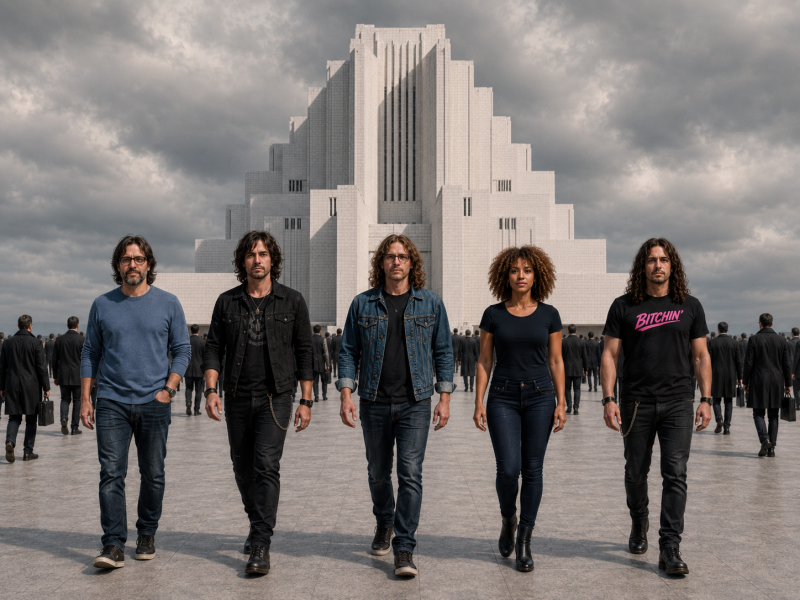
In an era when outrage is commodified and dissent is quietly shadow-banned, Motihari Brigade drop a 13-track conceptual Molotov cocktail straight onto George Orwell’s birthday. Released June 25, 2026, Problematic is the Indianapolis/UK project’s third album and its most ambitious yet — a fiercely intelligent, groove-heavy indictment of algorithmic groupthink, AI worship, militarism, and the seductive comforts of digital docility. Led by singer-guitarist-songwriter Eric Winston, the band brands its output “Rock-n-Roll Thoughtcrime,” and here they deliver exactly that: literate protest music that actually swings.
Musically, Problematic marries sharp, retro electric guitar riffs with classic rock swagger, garage grit, AOR polish, and occasional glam flash. The title track kicks things off with unhurried, riff-driven confidence — a swaggering anthem of defiant non-conformity that instantly lodges in the brain. “Chatbot Don’t Like It” turns machine logic into something almost danceable, complete with a self-censoring “Radio Clean Edit” bonus that neatly skewers the very censorship it mocks. The band’s chemistry shines brightest in the “Hubris March” suite pairing “Heedless of the Storm” and “Ten Years Time,” where de-tuned guitar howls mimic artillery before crashing into a blistering cover of Creedence Clearwater Revival’s “Fortunate Son.” The transition is blunt, funny, and devastatingly effective.
Elsewhere, “Pleasure Craft” seduces with glossy, pocket-sized convenience before revealing the prison bars, while “Not What They Seem” drips low-grade menace and “Save Ourselves” wrestles with societal cultification without tidy answers. The record closes on a tender note with the dreamy “Someone’s Dream,” a planetarium-hush meditation on legacy after forty-odd minutes of righteous noise. “Problematic (Reprise)” circles back to the central riff, muttering a self-aware shrug at the limits of certainty itself. Winston’s lyrics wear their philosophical scaffolding (Orwell, Huxley, Socrates) lightly enough that you can head bang first and ponder later — the hallmark of great protest rock. There’s frustration and grumpiness here, yes, but also sharp wit, genuine melody, and an undercurrent of hope that asking inconvenient questions can still be thrilling.
Problematic isn’t background listening; it’s conversation-starting, headphone-mandatory rock that makes thinking feel fun again. Three albums in, Motihari Brigade have refined their voice into something urgent, tuneful, and refreshingly unafraid. In a culture increasingly allergic to discomfort, this record proudly declares: keep asking questions. Be problematic.
Add comment
Comments