

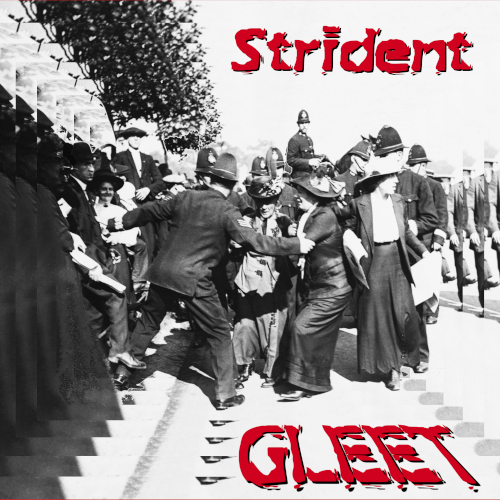
In an era where online discourse often feels like a perpetual shouting match filtered through algorithmic rage, GLEET’s latest single “Strident,” released June 19, 2026, arrives not just as a song but as a sonic manifesto. Clocking in at 4 minutes and 12 seconds, this industrial post-punk juggernaut doesn’t politely knock on the door of contemporary misogyny - it kicks it down with rusty steel-toed boots and a chorus of voices gathered from across the globe.
Musically, “Strident” feels like unearthing a forgotten early industrial relic from a derelict warehouse in 1980s Sheffield, only to find it pulsing with fresh, bleeding urgency. The track builds on a foundation of brutalist beats and working-class static—think a stripped-back Skinny Puppy energy crossed with the raw protest rhythms of classic post-punk, minus any romantic gloss. Snarled vocals cut through vintage-inspired soundscapes, while the production maintains a rusty, authentic edge that feels increasingly rare in polished streaming-era releases. It’s less of a wall of sound than some of GLEET’s denser catalogue material, a deliberate restraint that lets the conceptual payload hit harder. The result is hypnotic and disorienting in the best way: body-moving yet intellectually sharp.
At its core, “Strident” is a reclamation project. The band takes a word long weaponized against women—deployed to dismiss conviction as shrillness, firmness as fault—and flips it into a badge of justified defiance. The song’s arc is brilliant: it begins by highlighting the double standard (women stating reasonable views labelled “strident” while patriarchal nonsense often sails unchecked), then erupts into a fierce climax. That repeated rallying cry—“I’ll show you fucking strident!”—lands like a Molotov cocktail of catharsis. It’s born from the frustrations of the online manosphere’s resurgence, including absurd 2026 debates questioning women’s suffrage, and channels that rage into something powerfully creative.
What elevates “Strident” beyond standard protest fare is its innovative construction. Voice messages from friends and collaborators in London, Bangkok, and the United States form the track’s backbone, recorded after the concept was explained. This geographically dispersed, collaborative method gives the song a living, breathing texture—a literal chorus of voices rising in solidarity.
GLEET, the long-running project involving Gregor Former, Sam Neal, and collaborators like Michael Chilokoa and Kevin Mertens, has spent years honing an anti-commercial, absurdity-fuelled sonic language. With over 140 unreleased tracks in the vault and a new conceptual album Thames Sea on the horizon (about London drowning in rising seas), “Strident” emerged spontaneously during those sessions—a necessary aside that couldn’t be contained.
In a music landscape often content with vague vibes or detached irony, GLEET delivers something pointed, political, and unafraid. “Strident” isn’t background listening; it demands engagement. It’s a reminder that language can police as effectively as any law, and that art remains one of the sharpest tools for dismantling those mechanisms. Provocative, danceable, and intellectually rigorous, this is essential listening for anyone still believing music can scrape the rust off society’s gears. GLEET hasn’t just made a great song - they’ve issued a timely call to arms wrapped in feedback and fury.
Add comment
Comments