

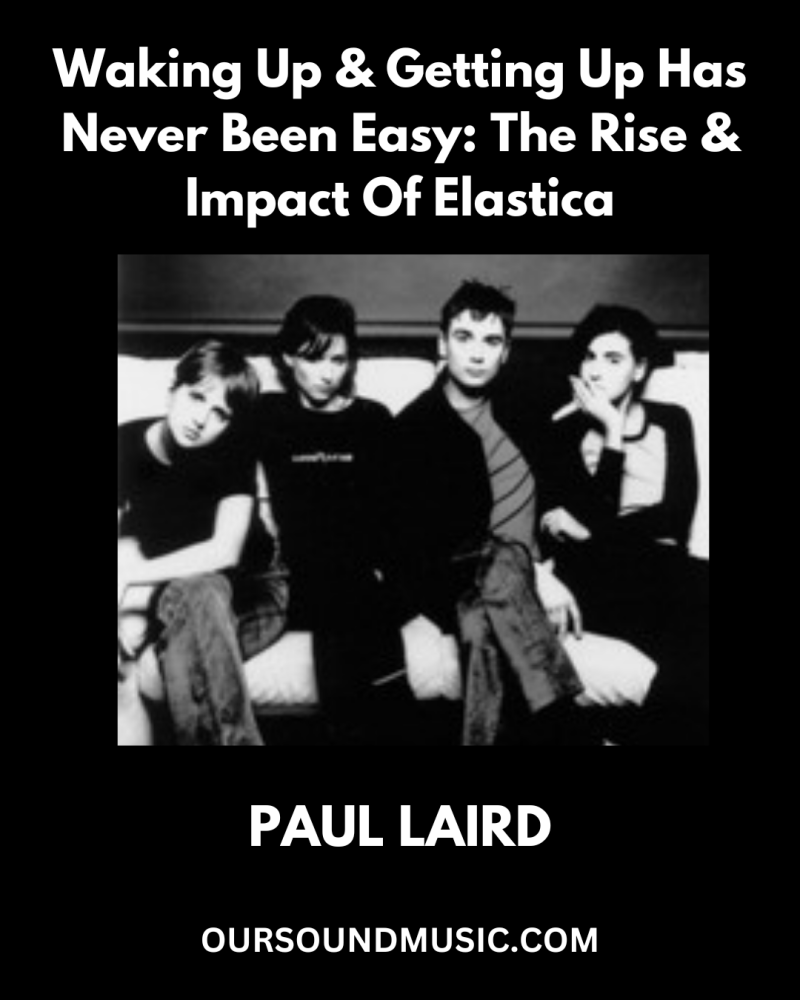
Author of "The Birth And Impact Of Britpop: Mis-Shapes, Scenesters And Insatiable Ones"
I can’t be sure.
I can’t be precise.
I reckon it’s November 1993.
It is certainly 1993.
I’m sure of that.
The November bit is guess work.
I want to say I am standing inside the Sub Club on Jamaica
Street, Glasgow. That seems like the sort of place I would have
been in November 1993.I should have kept a diary.
Here is what I know for sure - sitting at the bar is Justine Frischmann.
I know it is her because I have seen her face in the NME and the Melody Maker and Select and Vox and in every other magazine that has even a passing connection with pop music. She’s everywhere. You cannot avoid her. You wouldn’t want to. She is the sort of person that attracts your attention. She is articulate, clever, funny and achingly cool. Hip without the hipster.
A few days ago her band Elastica had released their debut single ‘Stutter’ and now they are on a tour of the UK with Kingmaker. Most people inside the Sub Club are here to see Kingmaker. I have little interest in Kingmaker. I am here, with my best friend Chris, to see Elastica. We are, for the first time in our miserable little lives, ahead of the game - we have seen the future and it is star shaped.
‘Stutter’ is a crucial moment in the history and evolution of Britpop. It is a landmark. It arrives at roughly the same time as the ‘Bellyache’ EP from Echobelly, the ‘Alice’ EP from Sleeper and ‘Kent’ and ‘Diminished Clothes’, the first two releases from Salad. The patronisingly named ‘female fronted bands’ sub-scene had arrived. Sisters were doing it for themselves. With a lyric that dealt with the ‘occasional problem of drunken male impotence’ this was clearly and defiantly, a song that wasn’t going to play by the rules. No faux feminism of the type being hawked by the Spice Girls and their call for young women everywhere to dress up like every male fantasy ever peddled by marketing departments at record labels ever and there was no ‘zigah-zig ah’ either. Instead here was a woman in control. A woman with things to say and who was going to say them no matter how uncomfortable they may make certain people feel.
Funny.
Honest.
Shocking.
Dig the new breed.
While enrolled at the Bartlett architecture school at ULU in the late 1980s, Justine Frischmann met a boy called Brett1. He wanted to start a band. She thought that was an excellent idea and so, together with some other boys, that is exactly what they did. They played a few gigs, wrote a few songs and then played a few more gigs but it did not seem like it was going anywhere. Justine and Brett were in love. That made things a bit more complicated. Especially when Justine left the band and also Brett. Striking out on her own Justine began to assemble a group who could bring to life her own pop visions. Along with another former member of Suede, Justin Welch, Frischmann brought in Annie Holland and Donna Matthews to form Elastica. Taking their musical inspirations from punk and post-punk they managed to create music that was spiky, angular, angry, fast, funny and deliciously catchy.
For a short while they played under the name ‘Onk’ which, I am sure we can all agree, is a magnificent name for anything or anyone but which would, in all likelihood, not have captured the attention of the press, or the public, in quite the same way as ‘Elastica’. They were soon signed to Deceptive, which was run by Steve Lamacq, and it was on that label that ‘Stutter’ was released. At this point the Elastica story couldn’t get any Britpoppier if it tried. A direct link to Suede, Damon Albarn lurking in the shadows, Steve Lamacq whose Evening Session was the home of Britpop on the air, and songs that were influenced by Wire, the Buzzcocks, Bowie and other glam, punk and post-punk nobility. It could have been dreadful. If the songs were no good then the whole thing would havebeen the perfect embodiment of all the half-truths that critics of the era like to use to ridicule it. All surface but no feeling. It wasn’t dreadful though, it was great.
I sidle up to Justine Frischmann in the half-empty Sub Club. Nobody has a mobile phone and only the anorakiest of the anorak brigade bring cameras to concerts. There can be no selfie. Also nobody knew what the hell a selfie was in 1993. ‘Um, you’re Justine from Elastica aren’t you?’ I manage to squeak. I’ve got no idea where this is going. I don’t have any end game. I’m not trying to chat her up as after all, she is dating the prettiest boy on the pop block right now. I’ve seen a famous person and I’ve plunged headlong into an encounter with no thought about my emotional safety. ‘Yes,’ replies Justine. ‘..............’ a dreadful, heavy, almost physical silence fills the space between us, which seems to be growing wider with every passing second.
‘Are you looking forward to the gig?’ says the pop star, exhibiting kindness and pity to an extent that I really don’t deserve. ‘Yeah. Thanks,’ is all I can muster. Then, for reasons that I don’t understand now and that I certainly didn’t understand then, I leaned in and kissed her on the cheek. She doesn’t look horrified, she looks sad for me. A sort of romantic pity fills her eyes and I stumble away.
I don’t know.
I don’t know.
I was very young.
I was a bit star struck.
Maybe I thought it was a very ‘London’ thing to do?
When I return to my friend he looks at me with a mixture of horror, repulsion, and contempt.
‘What the fuck was that?’ he asks. ‘Shut up Chris.’ ‘There’s something wrong with you,’ he says. I don’t reply. He is right. There is something wrong with me.
At the start of 1994, Elastica released their second single, ‘Line Up’ and it immediately confirmed the fact that they were a band deserving of your love. It is a brilliant little sliver of pop. A lot of people agreed because it reached number twenty in the charts. It is a bouncy, buoyant, bubbly, blast and blitz of art-school bop that saw kids rushing for the dance floor at indie nights up and down the country whenever they heard Justine start to make those puking noises. The real joy of ‘Line Up’ though was not to be found in the three minutes and fifteen seconds of the single itself but was instead lurking on the b side.
‘Vaseline’ was not a hymn to the moisture insulation properties of this petroleum based lubricant. It was a filthy little song about those bedroom activities that may, on occasion, require a little extra goo. Rude. ‘Connection’ followed as a single later in the year and, like ‘Line Up’, it was a massive hit free from any controversy whatsoever.
Let’s move on.
Sorry...what?
Three girl what?
Rhumba?
What’s that?
A song.
By who?
Hold on, I’ll go and give it a listen.
Back in a sec.
Ah.
It does sound quite similar.
Fine.
It’s exactly the same.
‘Talent borrows, genius steals.’
Clever old Elastica.
As Elastica leave the stage of the Sub Club I am dizzy. They have played a set that would have lasted for three hours for someone like Bruce Springsteen and condensed it into about thirty-three minutes. It felt like they played dozens of songs or maybe more. Maybe they played every song ever. They just played them all really quickly. It was a riot of spiky pop glory, like the entire Stock Aitken and Waterman back catalogue being played by a gang of hedgehogs dressed in black. Justin had bludgeoned his drum kit into submission. Donna had set the room and possibly the wider environs of Greater Glasgow on fire with her ferocious melody making. Annie had threatened to put out that fire with her icy cool shenanigans on bass. Justine had been… a star. Glamorous in DM boots, faded black denim jeans and a black t-shirt. A Hollywood starlet for the indie boys and girls of the nascent Britpop scene. I fell in love with every single one of them.
‘Waking Up’ was released in February 1995 and was an even bigger hit than those that had come before. It reached number thirteen in the UK charts and was free from any controversy whatsoever. Let’s move on. Sorry…what? No more what? Heroes? What’s that? A song. By The Stranglers? Hold on, I’ll go and give it a listen. Back in a sec. Ah.It does sound quite similar. Fine. It’s exactly the same. ‘Talent borrows, genius steals. ’Clever old Elastica. Again!
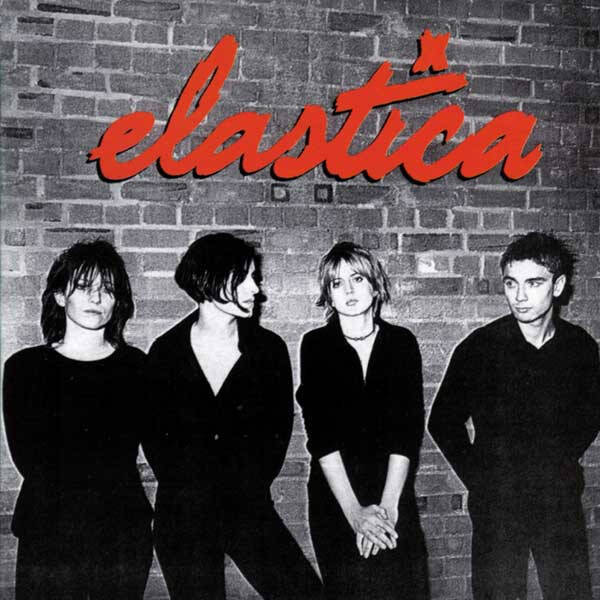
The much anticipated debut album ‘Elastica’ arrived the following month and hit the number one spot in the UK album chart. By the end of the year it had sold over one million copies. It also managed to make its way to number sixty six on the Billboard chart in the USA. Frankly, it was massive.
It kicked off with ‘Line Up’ and its sneering, near contemptuous attack on the things and people in the music industry that made Justine feel ill. It’s the perfect way to start a pop album. Then it was the seventy three second eponymous hymn to Annie, which is the sort of song that makes you feel glad to be alive with guitars that are strummed so vigorously that you fear for the instrument and the player, while drums are beaten, a bass throbs and Justine does Justine. ‘Connection’ was followed by ‘Car Song’ which was a song about the joys of motorway driving. The views, the tarmac, the service stations, the jams - although I have heard people suggest that the whole thing is a smutty little song about making the beast with two backs in the confines of a Ford Fiesta. I find that very hard to believe. Whatever the true meaning of the song, it deserves its place in your top ten for the line ‘Sometimes I just can’t function, my heart’s spaghetti junction. ’ Brilliant.
‘Smile’ is one hundred seconds long. It starts with a Ramones-y ‘1-2-3-4’. Justine sounds like the cool kid at school that you really wanted to be mates with but who had already figured out that you, and everyone else in a fifty mile radius, were losers who weren’t worthy of their time. Just me? Fine. The definition of cool is difficult to get agreement on. Everyone has their own thoughts on the issue of who, or what, is or isn’t ‘cool’. For many years there was no definitive answer to what the gold standard for ‘cool’ was - mainly because there was nothing to measure things against. Then Elastica wrote ‘Hold Me Now’ and Justine Frischmann delivered the coolest vocal in the history of rock and roll. Bored, snooty, arrogant, obnoxious - it was thrilling. She could have been singing ‘Fix You’ by Coldplay and it would have sounded cool - that’s how cool she was on that song. ‘S.O.F.T’ and ‘Indian Song’ were two very different beasts.
When I saw Elastica for a second time at King Tut’s Wah Wah Hut in Glasgow it was ‘S.O.F.T’ that had the biggest impact. It was sexy in a way that the Kings of Leon had wanted to be with the turgid ‘Sex On Fire’ (or whatever the hell that song was called, I’m not looking for it on Bing). It had a sleazy, slinky, sassy vibe and I can vividly remember my stomach flipping as I stood in the crowd that night. ‘Indian Song’ sounds like the sort of thing Suede would have recorded had Justine hung around, and that’s a good thing. The next two songs ‘Blue’ and ‘All-Nighter’ had a combined running time of three minutes and fifty four seconds. Too many bands forget the joy of this sort of smash and grab pop gubbins. Melody. Riff. Some words. Biff. Bang. Pow. Ace. The same trick is repeated after ‘Waking Up’ with ‘2:1’ and ‘Vaseline’ coming in at exactly the same run time, although that might not be true, I can’t do sums, but even if it is not true, it feels true. That’s what matters.
Before we return to the very beginning of the story with ‘Stutter’ at the album’s conclusion, we are treated to a ‘proper’ song in the shape of ‘Never Here’ and I’m sorry to labour the point and to get hung up on this but, really, the only word is cool. It has a great melody, a catchy chorus and another icy, too-coolfor-school vocal from Justine. That was it. Fifteen songs in about the same number of minutes. It’s an album that rarely features in discussions about the best of the era, mainly because people like me get hung up on ‘His‘n’ Hers’, ‘Definitely Maybe’, ‘Modern Life is Rubbish’, ‘Dog Man Star’ and the other big hitters, which is terribly unfair as ‘Elastica’ stands shoulder to shoulder with any of those records and suggested that a brilliant career was
about to be launched…
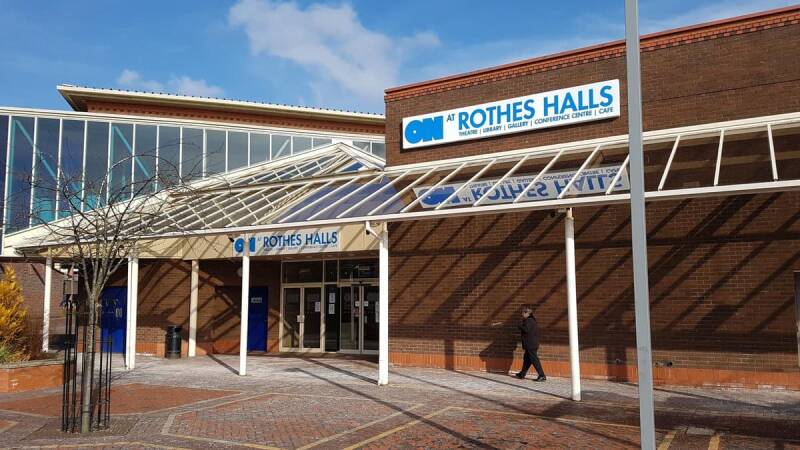
It is 1996. I’m with Chris again. We are standing at the back entrance of the Rothes Halls in Glenrothes. Glenrothes is a dump. It is the dictionary definition of nowhere. Elastica are playing a gig in aid of ‘Zero Tolerance’, a charity who offer support to victims of domestic violence. Chris and I don’t have tickets. We can’t afford them. Our plan is to wait until someone from the band ventures out of the venue and to accost them, which will be our first attempt at blagging.
Look, here comes someone. For a moment we can’t speak. Shortly after the release of ‘Elastica’, Annie had jumped ship and had been replaced by someone called Sheila 8 and here she was ‘round the back of the Rothes Halls. ‘Sheila! Any chance you could get us in tonight?’ This isn’t exactly subtle but it is, undoubtedly, direct. ‘Yeah. What are your names?’ Nice.
A second album wouldn’t arrive until 2000. It was called ‘The Menace’ and despite the muted, sometimes outright hostile, response it was a triumph. All weird and wonky, the spirit of The Fall hangs heavy over the songs, the experimentation of Eno looms or lurks in the shadows. ‘The Menace’ reached number twenty four on release and received favourable if not exactly gushing reviews. Andrew Collins in Q called it ‘surprisingly good’. Damning with faint praise? Sort of. The surprise wasn’t that the album was good, the surprise was that anyone should have been surprised. Frischmann and Matthews had already proven that they had the ability to write great pop songs. Maybe there was another surprise in the story at this point and that was that the album had arrived at all. Heroin had become the drug of choice for lots of people in the Britpop story, including some people very close to Elastica. It certainly had come to play a part in the life of Matthews. Few people under the influence of heroin can be said to be ‘go getters’. Then there was the fact that Frischmann had broken up with Damon Albarn during their hiatus. Drugs, broken hearts and, after aborted attempts to record in 1996, the departure of both Matthews and Annie Holland. None of this is the sort of soil from which one would expect great art to blossom.
My own response to the album on its release was one of indifference. I listened to the opening track ‘Mad Dog God Dam’ and decided it was a bloody racket and didn’t bother listening to the rest of it for a very long time. It was too angular, too spiky, too peculiar. The constant barrage of blokes with guitars and bad haircuts in the years since the end of Britpop had laid waste to my ability to really listen to music. I had become a dreadful
bore, a one-dimensional consumer, a dullard. My response to that was to turn my back, and close my ears, on the whole “Britpop” thing.
At that point it was impossible for a record like ‘The Menace’ to have had any impact on me. Fortunately I was able to move on, free myself from the shackles of bucket hats and Ben Sherman. Praise be. Otherwise I would still only be listening to music from twenty-five years ago while trapped in a cultural and musical ghetto. White bread. Plain white bread.
When I listened to ‘The Menace’ properly for the first time I was struck by one moment in particular. ‘My Sex’ is an Eno-esque mess, mass and mash of electronic noises, spoken word and beautiful synths that left me reeling. A hymn to love. ‘To walk through the wardrobe of other bodies we have known’ might just be the most beautiful line in a song ever. Yet it’s not even the most beautiful line in the song. That honour goes to ‘What I want
is to love you everywhere and everyhow’. It might not even be that those lines are especially beautiful but to hear Frischmann deliver them in a near whisper and with absolute conviction is enough to break your heart. It stands, or lies, as a tender counterpoint to the more brutal delights of ‘Love Like Ours’ with lines like: ‘A love like ours will never die, break my bonds, break my back’ being the closest it gets to the delicate delights of ‘My Sex’. It is one of the closest tracks on the album to the songs that so delighted the fans five years earlier.
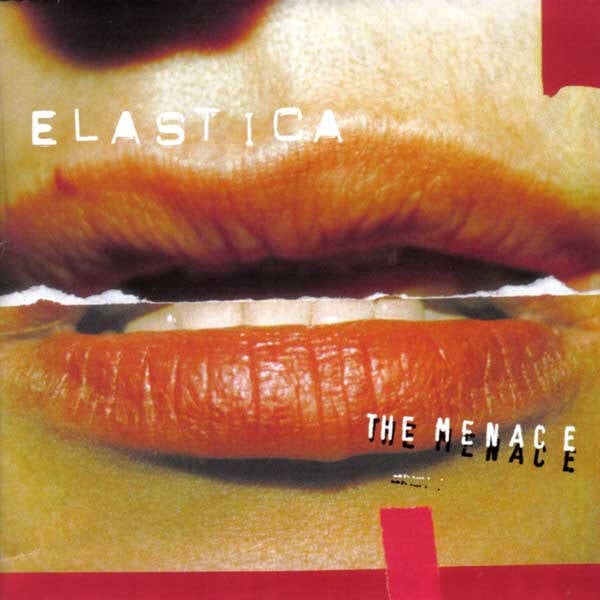
There are more tracks that recall the wonky, post-punk, punk-pop, spills of the debut album too like ‘Your Arse My Place’ and ‘Generator’, which can only be listened to when one is wearing Doctor Martens, black jeans and a leather jacket - a floppy fringe is optional. They sound like ‘Elastica’ and that is a good thing. But it isn’t good enough. Not if you want more from the bands you love than simple repetition. Fortunately, Frischmann understood how important it was not to stand still and so the album also includes one of the most creative, distinctive and disruptive voices in British music history - Mark E. Smith. Smith was involved in the writing and recording of both ‘How He Wrote Elastica Man’ (a playful nod to The Fall’s ‘How I Wrote Elastic Man’) and ‘KB’. Smith’s presence ensures that, just as with his own band, the music is urgent, forceful and experimental.
‘The Menace’ does have a problem but it isn’t the album - it is the presence of its predecessor, ‘Elastica’. The success of that album, the love that people have for it and its part in the Britpop story, all combined to create a curious weight that was, almost inevitably, going to crush anything that followed it. It would have been interesting if ‘The Menace’ had arrived first, but this isn’t an episode of ‘Quantum Leap’ and so we have to play with the hand we have been dealt by history. I could do that really annoying thing that people do where they claim to prefer one of a band’s less popular albums rather than the one that everyone else loves in order to get some likes on Twitter, or to provoke a reaction from you as you read this, but I’m not that guy. Not now.
‘The Menace’ is a good record and I would even go so far as to say that at times and in certain places it is a great album, and it definitely deserves more than the slightly sniffy reception it normally receives. What matters is not the end but the fact that Elastica succeeded in releasing one of the best albums of the nineties, unleashed a clutch of dementedly brilliant singles, pushed the idea of women in indie rock forward and generally showed how much could be achieved just by being cool and more talented thanany of your male peers.
Add comment
Comments