

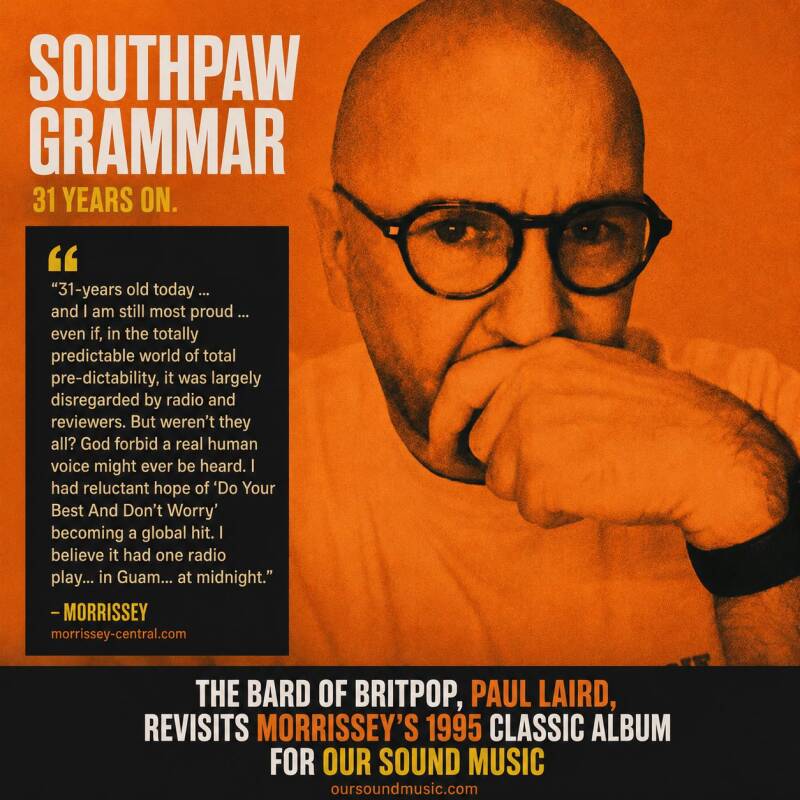
By Paul Laird
This article first appeared here
Fourteen days after Blur and Oasis fought the ludicrously overblown “battle of Britpop”, a race to be top of the pops between two of the biggest bands in the country with two of the worst singles in British pop music history, Morrissey released his fifth solo studio album to little fanfare. Despite his 1994 album, “Vauxhall and I”, being hailed by critic and disciple alike as his masterpiece, the size of both the Britpop “thing”, and the looming Smiths court case, were combining to deny him the space and the energy needed to put “Southpaw Grammar” where it deserved to be. Print and broadcast media were still obsessed with gobby Mancunians, but they were called Liam and Noel, not Morrissey.
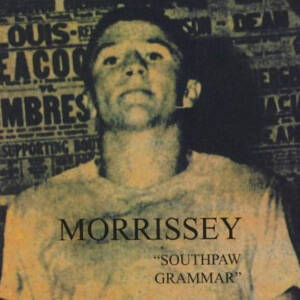
In 1992 Morrissey had been the subject of what must now be seen as a witch hunt by certain voices at the NME. During a performance at the Madstock festival at Finsbury Park where he was, essentially, the support act for Madness he had draped himself in a Union Flag and had appeared in front of a photograph of two rude girls taken by the photographer Derek Ridgers. Dressed in a gold lame shirt, iconic quiff standing to attention, and with his gang of rockabilly musicians backing him, he performed nine songs, four from his “Your Arsenal” album, including “The National Front Disco”. Malcontents and miscreants in the crowd took exception to this not very blokey bloke and began to throw things at him, bringing the show to an abrupt halt. The flag, the backdrop, and the problematic title of “The National Front Disco” were all used as evidence of his “flirting” with disaster and of racism in the following week’s NME. It wasn’t just a hit piece, it was a hatchet job, with old quotes taken out of context, and people holding more grudges than lonely High Court judges, wheeled out to say why Morrissey was a very naughty boy. What was really happening was that the hip cats at the NME had decided that they needed to move the paper in a different direction and Moz was the sacred cow they felt they had to slaughter to help them do just that.
Within a year some of those same journalists were working for Select magazine and were happily popping Brett Anderson on the front cover in front of a Union Flag and with the far from subtly xenophobic headline “Yanks Go Home” slapped on top. Apparently it was only racist when people they didn’t like were doing it. Then Geri Halliwell wore her Union Flag dress, and Noel Gallagher strummed his Union Flag guitar, and Liam and Patsy were photographed underneath a Union Flag bedsheet…and it was all very Cool Britannia. As ever Moz, like so many artists, was ahead of the game in his attempts to wrestle the flag back from the worst elements of right wing politics. Even the song that caused the problems was an attempt to paint a picture of how easily working class kids could be radicalised by sinister forces.
Morrissey should have been the Godfather of Britpop, he was the blueprint for so much of what lay at the heart of the era; nostalgic, patriotic, romantic, eccentric, literate, and witty. Instead he was pushed to the fringes and never acknowledged by anyone as being “the source”. His love of some of the bands is clear; covering “My Insatiable One” by Suede, popping over to visit Sonya and Glenn from Echobelly, inviting Elcka and Marion to support him on tour, the obvious love of his work by Gene, the aesthetics of Pulp. “Southpaw Grammar” should have been his Britpop moment, it should have put him at the forefront, again, of British popular culture. The album did reach number four in the charts, but given that “Vauxhall and I” had reached number 1 it was hard not to view this as a step backwards. It’s worth noting though that all of his solo albums to this point had been top 5 hits in the album chart. He was, by any measurement, still a contender.
This was the second of three albums that Morrissey would record with producer Steve Lillywhite. “I did three albums with Morrissey, and still didn’t know him that well.” he told John Robb in 2022. “He would let me, and the band, do all the music. Morrissey doesn’t think in terms of verse chorus or anything like that, he just starts singing when he thinks it’s time to start singing. The music writer would have an idea of this is the chorus, but Morrissey would come in half way through and sing the verse.” This echoes what I was told by Mark E. Nevin about his time working with Mozzer on “Kill Uncle”.
Before “Southpaw” arrived Morrissey had signalled a change in direction from the “Vauxhall” era with the single “Boxers” released in January of 1995. While musically it retained the lightness of touch that defined so much of “Vauxhall and I” the cover art was a departure from the portraits that normally adorned the cover of his solo work, instead of Morrissey there was a photograph of “The Pittsburgh Kid”, Billy Conn. Conn was a light heavyweight champion with an impressive record in the ring who had fought the legendary Joe Lois on more than one occasion. The cover for “Southpaw Grammar” also featured a boxer, the lightweight southpaw, Kenny Lane. While some may have questioned how the gladioli wielding, Oscar Wilde quoting, charming man of The Smiths could have developed such an interest in pugilism it is worth remembering that Morrissey had already shown an interest in the rougher side of life with the title of “Suedehead”, a nod to the more dapper cousins of the original skinheads, the previously mentioned Derek Ridgers skinhead girls image, and nods to the Krays in “The Last of the Famous International Playboys” as well as to the image of London gangster and Kray’s associate Charlie Richardson on the inner sleeve of 1992’s “Your Arsenal”.
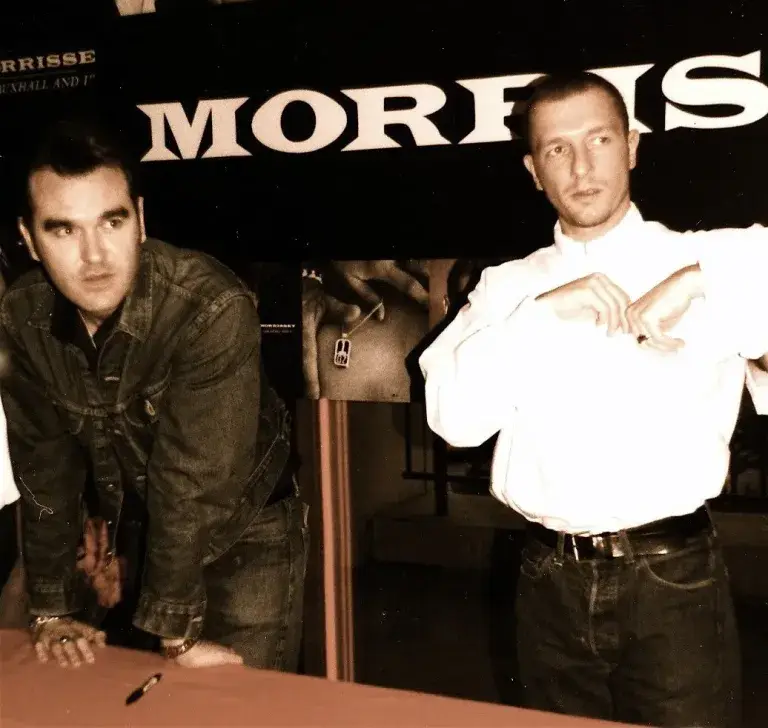
Morrissey had provided the image of Lane to designer Laurence Stevens from a 1963 copy of boxing magazine “The Ring”. Morrissey didn’t know when the image was from and so Stevens had to attempt to trace it back in order to source the original and then get permission to use the image on the cover of the album. “I’m still not sure if we got permission to use it, but we went ahead and used it anyway” Stevens told the makers of the unofficial Morrissey documentary “Jewel in the Crown”. The cover is also a return to the visual aesthetic of The Smiths when Morrissey would turn to figures from pop cultures past to adorn the singles and albums of the band, everyone from Yootha Joyce to Truman Capote were cover stars. As a solo star Morrissey had become what had once adorned the sleeves of his records – an icon, but for whatever reason he and Stevens designed an album sleeve that mimicked past glories for “Southpaw”.
A week before “Southpaw Grammar” took its place on the shelves of record stores across the country the single “Dagenham Dave” was released. Once again the sleeve was designed by Laurence Stevens, and once again it did not feature Moz. This time an image of former Chelsea, Tottenham Hotspur, Queens Park Rangers, and (briefly) Crystal Palace player and then England manager, Terry Venables, was used. It is a playful image of a young Venables sticking his tongue out at the camera.
Equally playful was the accompanying video for the single. Opening with a shot of a Gold disc copy of “Vauxhall and I” being placed in the window of a charity shop with a sticker declaring “One previous owner” the video follows Morrissey walking through the streets of what we must assume is Dagenham while being followed by a couple (the man being played by former Grange Hill actor, Mark Savage). Throughout the film we can see a cut/bruise on Mozzer’s right cheek, not the result of a bout of fisticuffs with some old foe or other, but carefully applied make-up. This was something that he had done in a photo shoot for an interview with Select magazine in May of 1994. In that interview with Andrew Harrison his fascination with boxing is explained when he says “The aggression of the ring excites me. It has me leaving my seat and heading for the ropes to join in.”
The NME with their usual sweet and tender nature on full display gave the song a brutal “review”, declaring it to be “piss poor old crap” and a “tune impaired three minute drone”. Morrissey himself was dismissed as “…the embarrassing incontinent grandfather of Britpop.” Of course this wasn’t really an attempt to review the single itself, an inoffensive, jaunty, and often hilarious, pop song, but was one more cut of the NME blade as they attempted to destroy the golden goose who had made the journal so successful. Nasty, childish, unkind, and lacking any wit or charm…ugly words from ugly people. Don’t believe me? Consider the reviews for the “Boxers” single, Ian Harrison writing in Q hailed it “as good as anything he has done”, but over at the NME John Mulvey heard the same song and didn’t just consider it to be not to his liking but “just another example of his tedious obsession with bits of rough who’d give him a kicking given half a chance” and then just in case anyone had any doubts left over what was really going on at NME towers Mulvey added this, “any enjoyment of his records nowadays is tainted by the fact that a nasty taste from all those obnoxious, apologist, quasi-libertarian quotes still lingers.” Nice. On the b-side Morrissey chose to throw away one of his best songs of the nineties, the magical “Nobody Loves Us”. Full of swirling guitars, a never better vocal, littered with the romance of the hopeless “dreamers and schemers all pie eyed and bug eyed and cross eyed…nobody love us…so we tend to please ourselves”. Had it been the lead single for the album things may have been very different.
I was about to start the third year of my degree when the album was released. I had endured two years of near total misery as a student at the University of Paisley, undertaking a degree in something called “Applied Social Studies” along with a diploma in social work. Them was rotten days indeed. I was a strange kind of person in a town that seemed to be unwilling to accept such a person. Violence was never far away as I trudged back to Gilmour Street station or even as I made my way to the University itself. I’m sure other people had a very nice time. I hated it. I hated the course. I hated my third year tutor as much as she hated me. I hated the fact that I wasn’t someone. I bought my copy of “Southpaw Grammar” from Stereo One, the record shop behind the train station where I bought so many of the key records of the Britpop era. Desperate to hear it immediately I bought it not only on vinyl but on tape too, then I hurried to the University library, took out my imitation Walkman, placed the tape inside, and pressed play. What I heard thrilled me.
While I may have been thrilled by “Southpaw” after that first listen in the hallowed halls of the University of Paisley library with Brenda from Bellshill researching for her essay on systems theory in the booth next to mine, time has revealed that muscular and more adventurous though it was, the album is not without flaw. That isn’t a controversial view of the album, Morrissey himself decided to tweak the whole thing when it was reissued in 2009, adding songs and rejigging the running order.
The album opens with one of three songs that together make up half the run time of the 8 songs. At over 11 minutes long “The Teachers Are Afraid of the Pupils” is a companion piece to The Smiths 1985 track “The Headmaster Ritual”. In 1985 Morrissey was railing against the “belligerent ghouls” who ran Manchester’s schools, highlighting the horrors of an education system that sanctioned the physical abuse of children by means of belts, sticks, and even punches and slaps. Fast forward a decade and Morrissey is looking at things from the perspective of the people at the chalk face, standing by the board “full if fear and intention, and if you think that they’re listening, well, you’ve got to be joking”. The song is built around a loop from Shastakovich’s Symphony No.5 in D Minor, and features some of the things that mark the songs composed by former Polecat, Boz Boorer – a darker tone, a more complex arrangement, and a more experimental feel. While it is a bold opening to the album, the truth is that it is overlong, a shorter version would have delivered a more potent introduction to this new world of Morrissey.
In July 2024 Morrissey posted a list of the songs from which he feels the greatest sense of self-fulfilment on Morrissey-Central (seen as the unofficial/official website of the star), a list of 40 songs from both his time with The Smiths and as a solo artist. Things that one would very definitely expect to be there such as “How Soon is Now?”, “Please, Please, Please, Let Me Get What I Want”, and “Everyday is Like Sunday” are all present and correct. Also in the list is the second track on “Southpaw Grammar”, “Reader Meet Author”. The tale of the public school boy snides in journalism and biography who like to adopt a working class accent and get “down with the kids”. Celebrating the lives of common people from the safety of a desk in the NME offices. “So safely with your software, All miles from the front line, You hear the way the sad voice sings, And you start to imagine things, Oh, any excuse to write more lies.” Who could he be talking about?
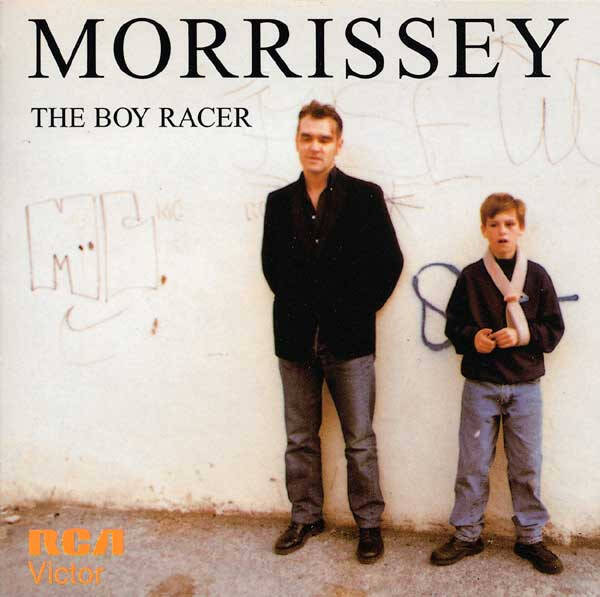
The second single from the album, “The Boy Racer”, didn’t come until November. Performing the song live on BBC’s “Later With Jools Holland” in that same month Morrissey agreed to an interview with the shows host. After some discussion of boxing the conversation turned to Morrissey’s musical influences, Cilla Black, Sandie Shaw, Billy Fury, and then he explained his ongoing love with, and for, the New York Dolls. “They were very violent, they were very witty, and they were very intelligent, and as you know most pop stars are not very intelligent, they’re not very witty and they are not very violent.” The song itself certainly has wit, intelligence, and a violent melody. There were no new songs for the b-sides, instead live versions of “London”, “Billy Budd”, “Spring Heeled Jim” and “Why Don’t You Find Out For Yourself”. The video for the single features Moz in yet more battle scar make-up and a cameo from future star of Eastenders, “Love Actually”, and recording artist, Martine McCutcheon.
At the same time as “The Boy Racer” was launching its assault on the charts, Morrissey was on tour with David Bowie. Bowie was promoting his “Outside” album. The prospect of seeing two legends on the same bill was irresistible, I bought tickets for the two Scottish dates in Aberdeen and Glasgow, but on the day of the Aberdeen show we learned that Morrissey had left the tour. “Morrisey” Bowie told STV “had come down ill in Aberdeen, and the papers had it that the tour plunged into turmoil and angry fans stormed out. What happened was that 45 minutes before the show we were told that Morrissey wouldn’t be performing. There was hardly a murmur from the crowd, 422 disgruntled Morrissey fans asked for their money back.” I didn’t ask for my money back and thoroughly enjoyed the show in Aberdeen…but I didn’t go along for the second night.
Earlier in the year Morrissey had enjoyed a much more successful live experience with his “Boxers” tour. With support coming from Marion I saw him on several of the dates, most memorably at the Motherwell Civic Hall when I found myself on stage as he sang “Jack the Ripper”. As he reached the line “crash into my arms, I love you”, I knelt before him, took his hand in mine, kissed it, and then with his loving eyes fixed on mine I stepped off the stage and into the pit. As I walked past the roaring crowd I tripped over my own feet and broke my ankle. I spent the rest of the gig with the first aiders, refusing to leave the venue until the concerts end, and then spent the night in hospital and the following few weeks in a cast. It didn’t stop me being in attendance the following night at Edinburgh’s Usher Hall.
Some people might tell you that a song with a run time of over six minutes is a bit indulgent, excessive, for a pop album. God only knows how those people would describe such a song that has a third of its run time given over to a drum solo before the song proper starts! We’re not in Kansas anymore. Drummer Spencer Cobrin was tasked, according to songwriter Alain Whyte, with “…drums like The Who’s ‘Let It Rock'”. As with “The Teachers…” a case could be made for “The Operation” being a distant relative to another Smiths track, the rolling drums, the lengthy running time, are reminiscent of the title track of “The Queen is Dead”.
The b-side of the album kicks off with the aforementioned “Dagenham Dave”, a jaunty, seemingly light hearted, song in the vein of both “You’re the One For Me Fatty” and “We Hate it When Our Friends Become Successful” from 1992’s “Your Arsenal”. This is followed with “Do Your Best and Don’t Worry” which was a late addition to the album. Simon Goddard in his “Mozipedia” describes the songs discussion of “high standards” meeting “low spirits” as being a possible reference to the making of the album. As with “The Operation” the song is notable for a fabulous performance on drums from Cobrin, bringing the song to a conclusion with what Goddard describes as Cobrin appearing to “swap the snare drum for a machine gun”.
The penultimate track on the album is the energetic, and fun, “Best Friend on the Payroll”. It is lyrically slight, and repetitive, but the music rolls along with gusto and it is almost impossible not to find yourself singing along. Many have speculated the track may well be inspired by Morrissey’s friendship with photographer Jake Walters who had been employed as Morrissey’s live-in personal assistant throughout the “Vauxhall and I” period. Never mix business with pleasure?
The album closes with the epic “Southpaw”, a song that Morrissey described in an interview with Zane Lowe as belonging “only to that moment in 1995, and none other”. A sprawling, musically adventurous, ten minute swoon and swamp of a song, it is impossible not to see this as a moment when Morrissey stepped out of his musical comfort zone and decided to let his musicians, and himself, simply run free. According to Johnny Bridgwood the song would have been even longer but the tape ran out. While it is possible to sympathise with those who have criticised the song for its length and lack of focus, the truth is that when you are dealing with an artist and not a pawn in pops game, you will occasionally be confronted with something more challenging. Deal with it.
The album is, undoubtedly, flawed…the inclusion of both “Boxers” and “Nobody Loves Us” would have lifted it, and the omission of “The Teachers Are Afraid of the Pupils” from the album (its natural home would have been on a b-side) would have given the album a more consistent tone. The great strength of the album, perhaps of Morrissey as an artist, is in the refusal to simply make “Vauxhall and I” part two. Gone were the lighter, more pastoral, sounds of that album, replaced by something more muscular and, dare I say it, macho. It is impossible to imagine that at a moment in time when something as moribund as “What’s the Story Morning Glory” could be praised as a work of genius, the same journalists would pointedly refuse to offer even a whispered word of praise for “Southpaw Grammar”.
Add comment
Comments