

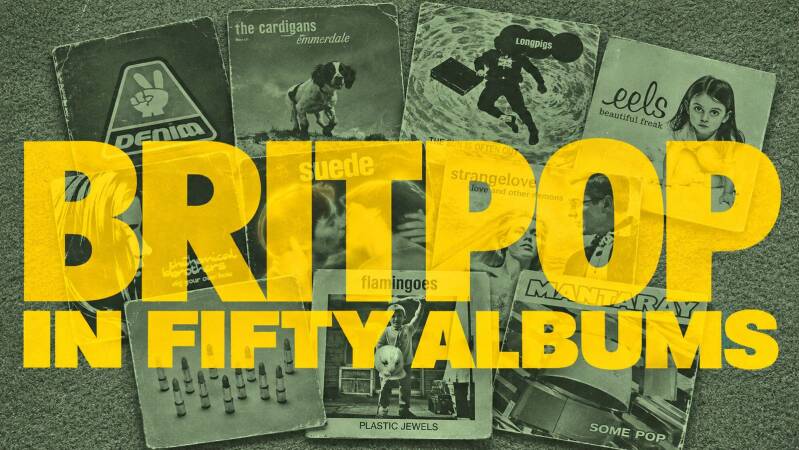
Well over three decades have now passed since whatever the Hell Britpop was ruled not just Britannia but the world at large. What had started off with a gaggle of indie kids finally making some inroads into the popular consciousness became the single biggest cultural phenomenon since the Mods and the rockers went at it on the beaches of Blighty in the sixties. Everywhere you looked were skinny boys in tracksuit tops, jeans and Adidas with pretty girls with that haircut hanging on their arm. The sun was shining, change was everywhere and most of it was very definitely for the better and one couldn’t help but feel that this was the greatest time to be young, to be free and to have nice clean teeth ever.
Now here we are in the aftermath of a global pandemic when we were all trapped inside our homes, death and division stalking the land, a political landscape that has welcomed and bade farewell to more Prime Ministers than Manchester United have had managers. Something has changed…again and this time it doesn’t feel like its for the better.
What to do.
There seems little to look forward to so indulge me as I look back (I know, I know…what’s new?) to a better time, to happier days, when hope was in abundance and nobody knew what sort of dystopia lay ahead.
Here then are the albums that I, in my finite wisdom, have decided are the ones that matter most in the Britpop story. This isn’t a “Best of…” list and it isn’t a list that is ranked in order of “goodness”. It is, instead, a chronological journey through the Britpop years in all their glory, colour, creativity and splendidness.
Similar articles tend to include at least three albums from Blur, Pulp, Oasis and Suede along with a couple each from other big hitters and luminaries of the period. Not here. Nope, here each of those bands will be represented by just one album…the one that I feel best represents the era. I am not arguing that these are the best albums of the time or even the best albums by those bands…doing that would mean creating exactly the sort of list I wanted to avoid. Instead I am trying to paint a picture of the era as a whole. Undoubtedly my choices are going to make some people quite cross…
Good.
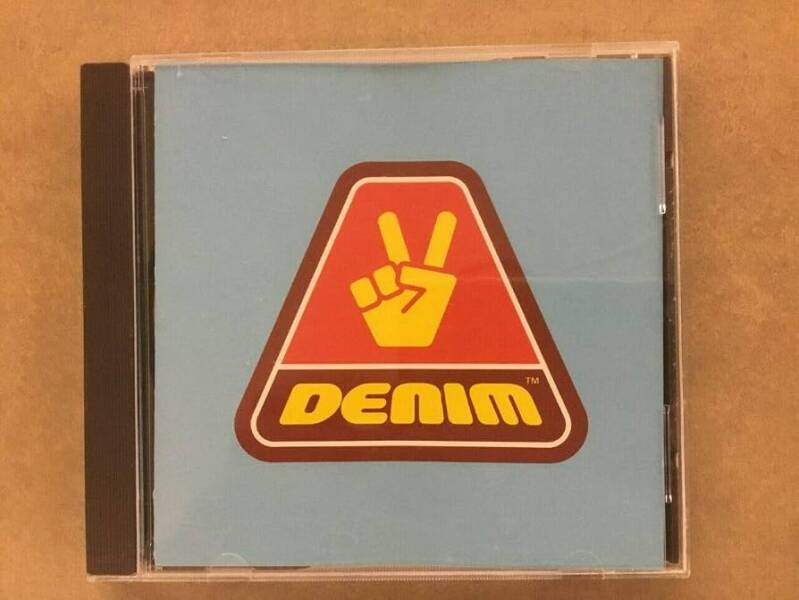
Back in Denim by Denim (11/11/1992)
Always one step ahead or one step removed.
Always too peculiar, too eccentric, too other.
Always touched by genius and havoc.
Lawrence followed up his (pop) art project, Felt, with this hymn to the seventies; the greatest glam rock record ever recorded and one that, within three years, would sound like the blueprint for more top ten hit singles than you could shake a stick at.
This is both a peculiar and peculiarly English record and is one that anyone with any interest in what happened to British music in the nineties should adore. While lots of people, mistakenly, saw Britpop as some sort of third Mod revival very few of the bands were making any effort to recreate the sonic booms that thrilled those cats in the sixties and were, instead, drawing their inspiration from glam, punk and post-punk…which is exactly where “Back in Denim” is rooted. It is also a delightfully camp record in a way that only an English band can ever really capture.
At the start of the Denim project Lawrence (no surname) had decided that bands were finished and that DJs were the future for music, as a result he refused to tour or make videos initially. Eventually he realized that he had been very wrong indeed and accepted an invitation to tour with Pulp, with whom Denim/Felt have so much in common, but where Jarvis grasped the moment and became a genuine star, Lawrence always managed to find a way to say “no” and has remained a fringe figure as a consequence.
New Wave by The Auteurs (22/02/1993)
I know.
He doesn’t like it.
But I like him so here he is.
Luke Haines is more than a singer and songwriter of course; right from the start he was a provocateur, an agitator, a thorn in the side. It wasn’t ever going to be possible for him to become a “pop star” or to enjoy the sort of success that his talent deserves because he wouldn’t ever have been willing to play the game, to bend and give in a little.
“New Wave” is the record that Luke Haines wanted to make and it sounds like…him.
There are moments of delicate pop wonder here but underneath everything, sometimes on top of things, is something darker, more challenging and more arch than any of the “big boys” of the era would ever have managed. Let’s be honest, it is unlikely that very many of the other bands of the time would know who Lenny Bruce was.
So Tough by Saint Etienne (22/02/1993)
Retro-modernism.
If Mod was ever really about being modern then “So Tough” would have been hailed as the greatest Mod record ever made. This was the sound of the past, fixed in the present and with both feet marching towards the future…or something.
“Close your eyes, kiss the future” should really be the Mod mantra.
It isn’t though because modern Mods don’t actually care about a modernist vision…of anything.
I digress.
“So Tough” is the real sound of nineties Britain; full of energy, charm, vision, wit, nostalgia and humour. The mark of how great it is lies in the fact that it sounds just as fresh, just as inventive and just as modern today as it did nearly thirty years ago. That’s quite the trick. Using and utilizing samples from the likes of Dirk Bogarde, Michael Powell’s “Peeping Tom”, David Essex’s “That’ll Be the Day”, Tom Courtenay in “Billy Liar”, and the 1972 not-very-good movie “Made”, this is like a guide to being interesting for suburban kids. An education in LP form. It’s a similar trick to the one Morrissey pulled with The Smiths cover art.
“You’re in a Bad Way”, “Hobart Paving”, “Mario’s Cafe” and “Avenue” are as vital as anything by any other British band managed in the nineties. I’m as guilty as anyone of getting all giddy when I remember seeing Oasis on “The Word” or Suede at The Brits but, really, the real wonder of Britpop lurks in the grooves of these songs.
Suede by Suede (29/03/1993)
What “Suede” started was the rejection of the American (pop) cultural dominance of Britain. British guitar music, certainly the stuff that wasn’t simply pedal to the metal rawk without the roll, had been living on the fringes of the mainstream for a long time. While many bands wore their indie credentials like a badge of honour the truth was that all of them wanted to do what R.E.M had done…take the underground overground.
Suede were outsiders in so many ways…all floppy fringes and fey ways but, crucially, they had three things that would propel them from being just another indie band and make them bona fide pop stars; Brett Anderson’s fiercely brilliant and ferociously sexual lyrics, Bernard Butler’s incredible talent and a burning ambition to be the best band in the world. An unholy trinity of features that saw them go toe-to-toe with the grunge gangs…and triumph.
This was the album that kicked down the doors to the mainstream…and once they were in, the road was clear for others to follow. And boy did others follow.
When “Suede” arrived, I was visiting my girlfriend in the nowhere town she lived in.
Two nobodies in nowhere; the Suede demographic.
At her parent’s house, sat together on the sofa poring over the lyric sheet as one glam rock, indie pop, sleazy bed track, sex and drug referencing slab of brilliance followed another.
It’s a heartbreaking, achingly sad and fabulously enigmatic album. It washes over you and leaves you barely above water. Drowning. Gasping. Dying. Yet happy to be there.
“I was cut from the wreckage one day.” and the band doing the cutting were Suede.
Modern Life is Rubbish by Blur (10/05/1993)
If “Popscene” had been the starting pistol for what would become Britpop, then “Modern Life is Rubbish” was the twenty-one gun salute that confirmed its existence…even if there was no label to hang on it yet.
This didn’t just start a renaissance in British guitar music, to be honest very few people noticed it when it was released, but it provided both an ensign for kids who didn’t understand the American howl of Cobain and co and a uniform. Out went the Joe Bloggs and bucket hats and in came a fierce melding of Mod and skinhead to forge something new…retro modernist. British image number one.
Slowly, but very surely, kids like me started to nod at other kids like me…recognisable now as a tribe, a small tribe but still a tribe, on the high street of whatever nowhere town we lived in. Something was happening.
Battered, beaten, bruised and, crucially, facing the end of their dreams Blur had flung themselves into an American tour that, despite nearly breaking them apart physically, mentally, emotionally and musically also proved to be the source of inspiration for their efforts to not only become the band they knew they could be but would also signal the start of an entirely new social, musical and cultural landscape in the UK.
“Modern Life is Rubbish” is more than an album.
It is a manifesto.
It is a rejection of the modern world.
It is a loving nod to a past that may never have existed.
It is a blueprint for what should come next.
From the epic perfection of “For Tomorrow” to the trippy delights of “Resigned” and all the pop, punk, new wave delights in between it is a staggering and defiant work. Only ears made of cloth and a heart of stone could fail to appreciate it.
This is an album that didn’t just set the wheels in motion for a change of direction musically but provided the template for fashion for the next five years.
Liberation by The Divine Comedy (16/08/93)
Baroque pop.
All roll and no rock.
Thoughtful, intelligent, articulate and literate.
Violins, violas, French horns and cellos gently tickle those noisy guitars to the sidelines to give the listener something altogether more satisfying and challenging.
With songs that are inspired by the likes of F. Scott Fitzgerald, Chekhov, E.M Forster and Wordsworth it is safe to assume that we really ain’t not in Kansas no more. This really is music for the jilted generation; for the bookish, the insecure, the clumsy and shy.
While Neil Hannon may have gone on to enjoy huge commercial success during Britpop’s peak it is “Liberation” that represents the other side of Britpop best; no lad culture here, no boorishness, no “Loaded” and it is more wonderful because of that.
Giant Steps by The Boo Radleys (31/08/1993)
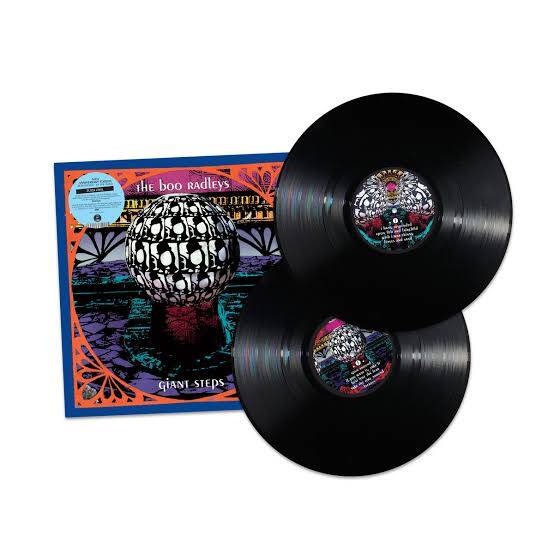
Strange, wonky, a bit shoegazey, brash, charming, funny, sad…and strange, again.
I came to The Boo Radleys through a compilation tape called “Indie Top 20…Volume 18”. Their contribution to that was “Wish I Was Skinny” which I fell in love with instantly. Mournful, plaintive, melodic, sweet, romantic and indier than thou the whole three and a half minutes left me reeling. I had bought the tape because it had “Stutter” by Elastica on it but it was “Skinny” that had me hitting stop, rewind and play over and over again.
“Giant Steps” was, in many ways, the dictionary definition of a Creation Records album, a band that few other labels would have taken a chance on being given the opportunity to do their thing with Alan McGee lurking in the background convinced they were going to be “the one”. It is a wildly creative album, experimental in places, and bridges the gap between the likes of Swervedriver and Chapterhouse and the giddy pop thrills that were to come.
If all you know of The Boo Radleys is that song then you should treat yourself to a bit of time with “Giant Steps” because it reveals a band who were capable of soaring indie, pop ‘n’ roll swells and swoops that most other bands of the era could only dream of…I’ll give you “Leaves and Sand” for starters.
Wild Wood by Paul Weller (06/09/93)
A lot of people (blokes) who liked The Jam couldn’t get on board with The Style Council. Thankfully a lot of other people (women and genuine Mods) understood what was going on and got on board. Then a lot of people in both groups struggled with, maybe even lost interest in, The Paul Weller Movement or whatever the Hell he was calling himself by the time the nineties arrived and it looked like he might be about to be consigned to history.
As with most geniuses though old Weller had a few tricks up his sleeve and in the late summer sun of 1993 he released “Wild Wood” and everybody jumped on board and, rightly or wrongly (mainly wrongly), they have stayed there ever since.
While many hail “Stanley Road” as his finest moment…they are wrong.
The gentle, delicate, breezy, romantic, delights and subtle thrills of “Wild Wood” are the moment when he reached his peak.
I don’t think he has ever come close to matching this album. A pastoral, folksy, soulful, hymn to classic English songwriting. His voice was the best it had ever been too, occasionally drifting close to Steve Marriott on things like “Shadow of the Sun”. It is, honestly, perfect.
Emmerdale by The Cardigans (18/02/1994)
They went on to enjoy the sort of global success that eluded so many of the Britpop big hitters, but when this debut album arrived nobody noticed…not even in their home country where it only just scraped into the top thirty.
Don’t let that lead you to believe that this is anything other than a work of wonder.
With more melodies than Spotify and the sort of baroque pop delights that leave you breathless on the floor this is one of the best albums of the nineties.
You don’t believe me? Take a listen to their cover of Black Sabbath’s “Sabbath Bloody Sabbath” and then get back to me. Taking the Satanic majesty of the dark Lords of British metal and turning it into something sweet and soulful. It’s the sort of wonderful homage to the past, laced with humour, that runs through the heart of Britpop as a movement and cultural moment; the musical equivalent of Damien Hirst.
His N Hers by Pulp (18/04/1994)
“His ‘n’ Hers” is a collection of 11 songs that deal with the truth, the reality, the horror, the dread, the fear and the dreadful boredom of the conventional. By adding in hints of the opposite of the conventional and tossing in the sort of dry, uniquely Northern humour that so defines bands from that part of the UK the ordinary becomes extraordinary at the nib of Cocker’s pen.
“Joyriders” tells the humdrum tale of a group of boys who live for the thrill of driving their cars as fast as they can on a Saturday night. They’re not nice boys. They have a sneering contempt for the bloke in the Jesus sandals. They pick up a girl and taker her to the reservoir and something awful happens there…the papers call it a tragedy. Another girl in a hideous relationship fills the lines of “Pink Glove”, he doesn’t love her…he just wants her to dress up for him. Something tight. Something pink. But if that’s all that relationship is then who is she? “Happy Endings” suggests that something very, very different to that is the truth of relationships. The whole album is littered with these stories and with a musical and lyrical prowess that takes your breath away.
“His ‘n’ Hers” put Pulp on the front pages of the music papers and, thanks in large part, to the joy of Jarvis they stayed there for a very long time. The final single taken from the album was an E.P. entitled “Sisters” and it featured four tracks but as far as the record buying public were concerned it featured only one…”Babies”. It reached number 19 in the charts and now 24 years later it still fills the dance floor at any indie night or Britpop celebration with boys and girls doing their very best imitation of Jarvis. Like a floor filled with stick insects being delivered a mild electric shock.
It is also the best Pulp album.
So there.
Everyone’s Got One by Echobelly (22/08/94)
“My country too” yelled the slogan on Sonya Madan’s Union Flag t-shirt.
The sort of political statement that critics of the Britpop label like to ignore; happier painting the era as some sort of precursor to the rise of UKIP and For Britain. Happy to ignore someone like Madan who was a startling presence and a political statement just by being who she was, where she was.
Anyway…
“It wasn’t just Madan as a stunning, revolutionary, presence that was, well, stunning and revolutionary. The album was a wonderland of musical flourishes and lyrical depths that few of their peers could have matched.
All the darkest corners of human existence are here; lonleiness, isolation, identity, abortion, sexism…if you want proof that Echobelly were always more than another “female fronted band” you only need to consider what exactly it was that Madan was writing about.
Grand statements like “Father Ruler King Computer” which took its inspiration from the second wave feminism key text “The Female Eunuch” by Germaine Greer. It’s odd but Greer and her writing play a minor role in the Britpop story with this track, S\M*A*S*H and their single “Lady Love Your Cunt” (and their giving a copy of the essay with another release) and Sleeper playing with the title of that essay with “Lady Love Your Countryside”.
Shining ambitions like the towering pop anthem “I Can’t Imagine the World Without Me” which could make claim for the top spot in any list of singles released during that era. The rolling, pounding, drilling drums. The aural treat of Madan yelling “…me, me, me, me, me…”. The sheer craft in the melody being delivered by Glenn Johansson. It’s a terrific pop single.
Magnificent though both of those tracks are and fantastic as the album is there is one moment that elevates the album and the band from being just a band to a band worthy of your love. That moment is “Insomniac” which, in a better world, would have been number one on release and would be number one still. It’s perfect. In every respect.
Lyrically the song deals with one of the dominant features of that time in British popular culture; cocaine. Let there be no doubt…Britain in the mid 1990’s was buried under an avalanche of white powder. Its “influence” can be heard all over certain records from that time, most obviously “Be Here Now” by Oasis and “The Second Coming” by fellow Mancs the Stone Roses. Bombastic. Over produced. Dull. Occasional flashes of the old magic. That’s the truth of those records, and others, and it’s also true of the musicians responsible. “Whatever turned you on…you put it up your nose dear.” sings Sonya while Glenn and the gang provide a musical backdrop that was so clean, so crisp and so free from the influence of Charlie that it ranks as the toppermost of the pops for many connoisseurs of Britpop.
Rifferama by Thrum (08/94)
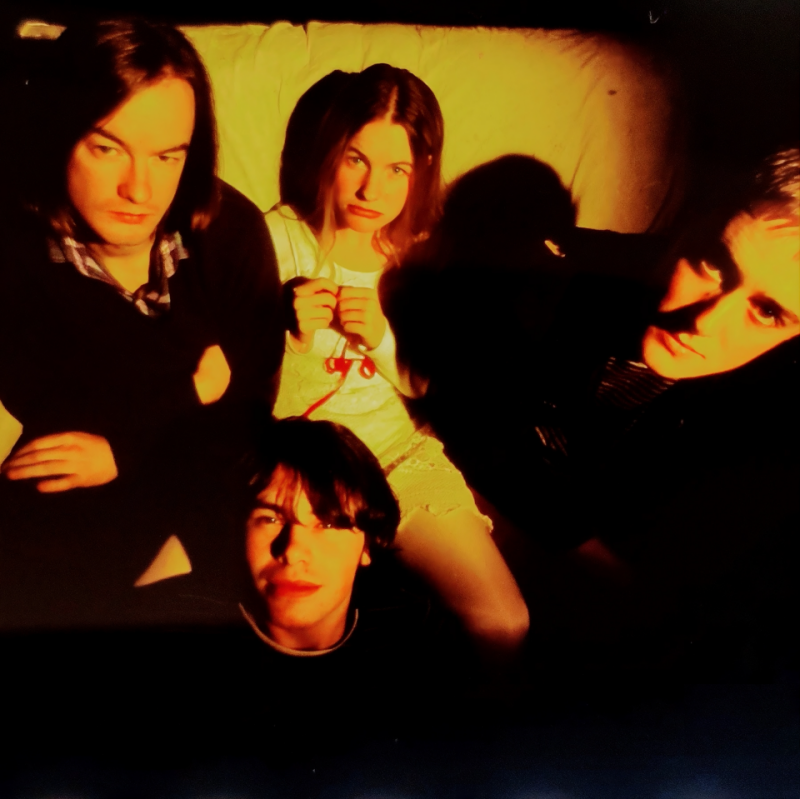
(Editors note: Thrum are the greatest band I had not heard of before today).
They were on The Word.
They supported Suede.
They released one of the most gorgeous singles of the decade in the shape of “So Glad”.
They had a singer with a voice unlike any other female artist of the era.
But it just didn’t happen.
The world is cruel.
I first saw Thrum when they supported Suede at the Plaza in Glasgow. Monica Queen was wearing a pair of purple, flared, cords. I was right at the barrier, and I couldn’t take my eyes off her. I don’t think I had ever really known what “cool” was until that night. She was lost in the glorious noise she was making, her voice lifting me higher, my desire to see Suede utterly forgotten for the duration of their set. She was incredible.
A few days later I was sitting in the KFC at the bottom of Argyll Street when the band came in. I asked for an autograph for only the second time in my life…and Monica scrawled her name over a KFC napkin. I hadn’t known a thrill like it.
Change Giver by Shed Seven (05/09/94)
Youth and young manhood all laid bare on one of the very best debut albums of the nineties from one of the very best bands of…ever.
Yes, really.
Don’t bother me with your Radiohead, Beatles, Droning Bones chatter, I am utterly disinterested. They are boring and, frankly, so are you for adhering to the cultural dictats so blindly and faithfully.
Zzzzzzzzz.
“Change Giver” was one of the defining records of the era for me because Shed Seven were one of the first bands from the New Wave of New Wave I saw and even in the tiny confines of a dingy Dundee venue I was blown away.
Cockier than a cocksure cock of the North and a dozen of his really cocky mates they was but, crucially, they had the songs to back it all up.
I saw Shed Seven just as “Mark/Casino” girl was to be released. They were touring with Compulsion and were being billed, at that point, as part of the New Wave of New Wave. Compulsion was a bit punky…agit-pop, rubbish hair and even worse clothes.
Shed Seven were an entirely different proposition altogether.
For a start they had songs.
Then they had decided to do something clever…they had written good songs.
I know.
Who knows why more bands don’t think of it.
“Mark” was the sound of four young men who knew that they were going places.
They probably didn’t know that they knew…but anyone who listened knew.
It was a confident swagger of a record.
Better than a debut record has any right to be.
What followed was a career of maximum highs and very few lows.
Home by Terry Hall (12/9/94))
Craig Gannon of The Smiths, Ian Broudie of The Lightning Seeds, Andy Partridge of XTC, Nick Heyward of Haircut 100, and Damon Albarn of Blur all worked with Hall on this album. That is quite the line-up…each of those artists bands helped to shape British pop music in too many ways to mention in a piece of fluff like this article. That’s before we get to Hall himself…The Specials, Fun Boy Three, Terry, Blair, and Anouchka, Vegas (with Dave Stewart), and then this his first solo album proper.
On release it only just broke into the UK top 100.
Just think about that for a second.
At a time when the cool kids were supposedly digging the hip beats of the Britpop sound, they turned a deaf ear to a bona fide genius, cultural icon, and legendary figure in British music. The world had gone mad. You will know “Sense” because of The Lightning Seeds, but every song here is a delight equal to it.
A better world than this would have put this at the top of the pops.
Shame on you.
Out of Here by Corduroy (26/9/94)
Acid Jazz.
Nice.
Corduroy were one of the support acts for Blur’s “Showtime” gig at the end of the “Parklife” tour. Alongside Pulp and Supergrass, they took the stage at the Ally Pally in October of 1994 just a few weeks after the release of this their third album. It is the sound of the dancefloor at Blow Up! Groovy, melodic, Mod inspired, and crucially all songs you can shake your tailfeather to.
A footnote in the story of the era…but that story is incomplete without acknowledging them.
We Are Shampoo by Shampoo (20/10/94)
I know.
I know.
I’ve heard it all before.
I’ll save you some time; I don’t care about your aggressively sexist and violently dull opinion on Shampoo. I care even less about why you don’t consider them to be “Britpop”.
OK?
Good.
Now for people who have enough dignity not to ask the hairdresser to cut their hair like Paul Weller let’s just get on with revelling in all the wonder and wonky delights of “We Are Shampoo”.
It is difficult to imagine a record that better captures the spirit of rock ‘n’ roll than this; shimmering guitars on tracks like “Delicious”, teenage att-i-tood on songs like “Trouble”, the night on the town regrets of “Shiny Black Taxi Cab” and the couldn’t give a fuck of…everything.
While Oasis were bending the knee to the Gods of rocks past by covering “I Am the Walrus”, Jacqui and Carrie were thrusting onwards and upwards.
Funny, maudlin, hopeful, romantic and brilliant.
Those who know…know.
Oh…it’s also worth pointing out that “Gameboy” is the best song of the nineties that you haven’t ever listened to.
Ta.
“Trouble” arrived in 1994 and it is one of the best pop songs of the decade. Armed with a rhyming dictionary and paying scant regard for trifling matters like, you know, singing they shout, sneer, speak and shriek their way through a tale of teenage troubles that anyone who has ever actually been a teenager could relate to. It is a song that seems to have been created in the laboratory of some mad pop scientist with one aim…to put a smile on your face.
You must be suspicious of people who cannot find a reason to love (yes LOVE) a song like “Trouble”. They are the sort of people who would have you believe that seeing Bob Dylan live is a near religious experience.
That’s bullshit.
I’ve seen Dylan live…I wanted to rip the flesh from my bones and dive headlong into a swimming pool full of vinegar after about seventeen seconds.
So there.
Some Pop by Mantaray (07/11/94)
1994 was quite the year for giddy pop tarts like me. I say pop tart because, given the fact that I was 21, I couldn’t accurately describe myself as a pop kid. I was young though. Young enough certainly. Old enough to know better too.
It was the year that Britpop really broke into the mainstream. It had been quietly making its mark on indie kids up and down the country since Blur released “Modern Life Is Rubbish” (maybe even since they released “Popscene”) but the juggernaut that was grunge was making it nearly impossible to sell records unless you were American, had dreadful hair and wore a plaid shirt. But the kids who knew better were searching out something sharper, something smarter and something less Seattle.
Then came the Fierce Panda singles “Shagging in the Streets” and “Return to Splendour”. Two double 7″ compilations with spiky, angular, awkward British new wave of new wave and Mod revivalist tendencies featuring the likes of Compulsion, Blessed Ethel, S\M*A*S*H, The Bluetones and Mantaray. Not every track was a corker but enough of them were.*
A short while later a certain Select magazine front cover encouraged “Yanks” (oh dear) to go home and off we went. A great big shiny pop movement was born. Bright young things in the best clobber they could find were turning their back on the howl of American dissatisfaction and tuning into mockneys, cockneys and anything else that came wrapped in a reclaimed from the far-right Union Flag.
“Parklife”, “Definitely Maybe”, “His ‘n’ Hers” and “Dog Man Star” were all released in 1994. Four albums that could easily lay claim to the best albums of the decade. All utterly different…the classic British pop of Blur, the Northern swagger of Oasis, the outsider chic of Pulp and the gothic glam of Suede. Great records all.
The problem was that these bands and others like Supergrass, Elastica, Shed Seven, Sleeper and a few others occupied so much of the media’s attention and dominated the playlists that other groups struggled to break through. Sure, they got deals and toured but making it was nearly impossible.
Step forward “Mantaray”. A more perfect encapsulation of that time you would struggle to find. Even if they had had no musical ability, they could have got a record deal on the back of how great they looked. Singer Christopher Latter made Damon Albarn look like the hunchback of Notre Dame. David Standen and Simon Mortimer were hardly going to struggle to find favour with the ladies either. Chuck in some great hair and a wardrobe full of proper gear and there you had it. Unlike the likes of Menswe@r who were also sharp kids and who had an ear for a catchy melody Mantaray were a proper band. Not just chancers (that’s not a criticism of menswe@r by the way).
The song “Sad” on the Shagging in the Streets E.P for Fierce Panda was a brilliant slice of pop with attitude. “I’m so fucking sad, don’t know why…” is quite the way to introduce yourself to the public. I was hooked straight away. These kids were alright. It took about another year before I heard anything else and then came “Insomniacs Dream” which was so perfect I had to listen to it six times in a row to make sure I hadn’t allowed anticipation to trick my ears into hearing something that wasn’t there. Catchy hooks, memorable chorus and more of that attitude that had won me over in the first place.
Another single “Hide and Seek” and then what I had been waiting for…the debut album. What a debut it was. Not only was it loaded with classic pop hits, but it was released on yellow vinyl and came with a free skinny fit Mantaray t-shirt. You see that right there is what separates a band you can care about from the likes of Radiodead. People who care about pop music don’t give a shiny shit about your musicianship, your development, your politics or your desire to break new ground…we want to sing along, we want yellow vinyl, we want t-shirts and we want to feel like that’s all being delivered from people just like us.
That was what Mantaray gave the people who listened. I loved them for it. When the 30th anniversary of Britpop rolls around, and we must listen to Justine Frischman talk about her relationship with Damon Albarn again please spare a thought for Mantaray. A great band buried in the Britpop graveyard and unfairly forgotten by all but a few
That Was Now but This is Then By The Weekenders (1995)
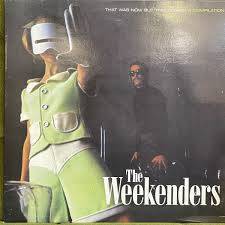
The Weekenders were Paul Tunkin on vocals, James Hender on guitar, Chris Remington on bass and Steve Smith on drums. They sounded, to my provincial ears, like London. Specifically, they sounded like London in 1994: soaked in Kinks melodies, drenched in the fury of The Jam and The Buzzcocks, bathed in the glories of England’s pop past but gearing up to be the sound of England’s present and maybe future too.
Their debut single was a mail order slab/stab of the most quintessentially British of Britpop. ’All Grown Up’ backed with ‘Househusband’. They sounded like they may have been recorded in my front room and were raw, rough around the edges and all the better for it. To be honest it doesn’t matter all that much what The Weekenders sounded like, there were more important things to consider about bands at this point like did they come from London? Were they Mods? Did the singer have a girlfriend who was in Elastica? Big picture stuff.
While this first single wasn’t exactly the stuff of legend, musically speaking as nobody now talks about it in hushed, reverential tones and my copy would probably fetch about 75 pence on eBay, their next single was genuinely brilliant. ‘Seems You Missed Sunday’ was a hymn to staying out all night, taking loads of drugs and then crashing out for 24 hours. Simple stuff but stuff that when set to a cracking, crackling, melody can
make the hairs on the back of your balls stand on end.
There was one more single which, for its title alone, deserves to still be number one in the charts: ‘Inelegantly Wasted in Papa’s Penthouse Pad in Belgravia’. Told you. Number one title. That was it. All over for The Weekenders. This album captures everything the band unleashed on the public, Paul went back to running the club Blow Up, and the band disappeared.
They were fun, they were energetic, they had the right clobber and, while I was cleaning the toilets of the local McDonalds, they were living the dream. Or at least they were living my dream.
Mornington Crescent by My Life Story (30/01/1995)
Baroque pop.
The soul of Anthony Newley.
The score of the greatest musical never to exist.
A man losing himself, losing himself, in London.
Billy Liar.
The sixties done better and done properly.
Passionate, ambitious, grand, grande and romantic…oh, so romantic.
And that’s just the opener “Forever”.
“Mornington Crescent” is the sound of one man taking everything, and I mean everything, he has and casting it out into the world in a wild attempt for someone, maybe everyone, to hear it, adore it, get it and live it.
Jake Shillingford is a fine writer and a great performer. Listening to “Mornington Crescent” is like being given a guided tour through his life, loves and losses. Their is so much to marvel at here but the most marvellous thing about it is that it even exists…nobody else was making music like this in the nineties, My Life Story didn’t want to sound like a Beatles b-side, they were oblivious (seemingly) to the dull thud of Slade and they didn’t really care about having Paul Weller talk about how great they were. They existed in their own universe and were all the better for it…isn’t it always the way?
“Mornington Crescent” was released to absolutely no fanfare.
It reached number 115 in the charts.
Two of the three singles released from the album didn’t chart and the third, a song called “You Don’t Sparkle (In My Eyes)” reached the high spot of number 155 in the singles charts.
It wasn’t that nobody was listening…I was and I played my part in propelling “Sparkle” to the bottom of the hit parade. People were listening, it’s just that not enough of us were listening. “Mornington Crescent” is a staggering, swaggering, shimmering, slinky and, whisper it, sexy, album filled to bursting with Bond themes for Bond films that never were and the sort of sixties pop that bands in the sixties couldn’t have dared dream of producing. It was the musical equivalent of a pair of tailor-made trousers from Chittleborough & Morgan; mohair, frog mouth pockets, cut on the ankle, no belt loops, fully lined. Proper.
Plastic Jewels by The Flamingoes (14/02/95)
James and Jude Cook delivered one of the best albums of the nineties when they released “Plastic Jewels” in February 1995.
Oh yes they did.
I’m very sorry that you don’t agree or that you haven’t heard it.
That’s not really your fault.
The album highlights the fact that Flamingoes were about much more than power pop and pop power. Lyrically they were capable of dealing with the types of issues that the likes of Strangelove and Marion were over on the darker side of Britpop, particularly on “Absent Fathers, Violent Sons”…an honest and deeply personal song written by Jude about the impact of divorce, a step-parent and an absent father. Musically the album is a rush…it’s brash, melodious, adrenaline fuelled, pop music that manages to owe a debt to its influences while never stepping over the line into cover versions or tribute act.
It also includes the best single of the Britpop era (yes it does) in “Disappointed” which should have been a massive hit;
Looking back now James recalls “When we took it to Kevin, our drummer, in the rehearsal room there was real excitement. “Hey, we might a hit on our hands”. It immediately went to the start of side one on the album running order. Like “For Tomorrow” it was also the last song written for the album. Then, when we were mixing the album at Wessex, Steve Lamacq played it on the Evening Session back to back with “Caught by the Fuzz” by Supergrass. We sounded weedy in comparison. Everyone in the room was chuckling at the “Here comes my mum/she knows what I’ve done” line, which, I admit, is priceless…but I was a bit jealous, deflated. Disappointed?”
The problem for so many bands at this point was that while the “scene” generated label interest and the opportunity to grab a few paragraphs in the N.M.E or Melody Maker it was also crowded…which made making the leap from the edges to the centre very difficult, particularly after 1994 when the press had already decided who the “important” bands were; Suede, Pulp, Oasis and blur dominated the press and radio to such an extent that bands like Flamingoes were starved of the oxygen of publicity that would have given them a shot at the big time.
Olympian by Gene (12/03/95)
Difficult.
Really difficult.
You don’t need me to say anything about this one.
The band have returned to great fanfare.
At the time it was an important record to me.
I think I will just leave it there.
Smart by Sleeper (14/03/95)
“Smart” would have taken its place at the top table, maybe at the head of the table, for nineties albums by British bands, maybe just by bands, without the presence of any of the singles. That is a remarkable claim, extraordinary. Extraordinary claims require extraordinary evidence of course.
“She’s got skin the colour of bread”
“Your beautiful face making my eyes feel sore”
“Got an old desire for you”
“I want to see you boxing naked to the death”
“I just haven’t felt the same, but then I’m very sentimental”
“He’s reading a thin book; it’s got no words just pictures”
“I think you’re attractive…but in a strange way”
Snapshots.
Nuggets.
Bits.
Pieces.
How do you capture the whole of an album like this?
It’s a lyrical album…and I don’t mean the lyrics.
Not just the lyrics.
There is imagination, beauty and emotion in every note…each demented riff and lick from Jon, from each tickle, brush and pound of the drums at the hands of Andy and in each groove of the bass from Diid.
I know.
People will spend days, weeks, months, swallowed by, wallowing in, nostalgia for the supposed big boys of Britpop every year…” The Great Escape”, “Morning Glory”. But the truth is that those albums are little more than the musical equivalent of stifled yawns.
If you want an album that sounds like a band who think they might not get another shot and who are going to make sure that if this is “it” then “it” is going to be something worth remembering, then you don’t need the mockneyisms of “The Great Escape” or the MOR puff of things like “Wonderwall” …you need “Smart”.
This is what the album you wanted to make when you had a head full of dreams would sound like…because it was made by people with the same dreams. This is the sound of you and me filtered through people with more drive, more determination and, yes, more talent than we could muster between us.
Elastica by Elastica (14/03/95)
A muse, soulmate and confidante for two of the towering figures in the story of Britpop, Justine Frischmann could have had her place in the story of nineties Britain secured on the back of simply being there but, incredibly, she was also the driving force behind one of the most important bands of the period in her own right.
Not bad going.
Elastica looked like a band.
One should never underestimate how important it is that a band look like a gang. As Oscar Wilde said; “Only a fool doesn’t judge a book by its cover” and so it is with bands…if they look like accountants or drama school dropouts then the chances are that they will sound like accountants and drama school dropouts; who said Coldplay? Shush.
More importantly Elastica sounded like the sort of band you wanted to be in; edgy, spikey, sexy and front loaded with more attitude than an army of Liam Gallaghers (better looking too). They had it all.
This debut album is about as good as it gets.
Post-punk pop thrills abound and the whole thing is tighter than tight, razor sharp and fabulously sexy.
Drink Me by Salad (15/05/95)
Weird and wonky in the most wonderful of ways.
Peculiar and perhaps a bit pervy in a practically perfect sense.
Nothing was ever simple or straightforward with Salad; they were never interested in being anything other than…themselves. Britpop adjacent maybe?
Just listen to “Drink the Elixir” and tell me that you don’t come over all peculiar like as Marijne whispers and wails her way through the soaring riffs, discordant thunder and bleeps of the music. It is equal parts erotic and unsettling…maybe the truly erotic always is.
This has taken a turn and I’m not sure it’s for the better.
Look, the point is that, once again, some of the very best parts of this thing we call Britpop had bugger all to do with Lennon and Macca or Keef and Mick…instead they were drawn from something, and somewhere, else.
Salad are delicious.
I Should Coco by Supergrass (15/05/95)
This is the sound of youth.
Frantic.
Frenetic.
Furious.
Frenzied.
Fast.
Flirtatious.
Fabulous.
I know.
You are just like me, and your youth was rarely, if ever, any of those things…at least not for any extended period. In truth my own adolescence was a messy blend of acne, angst, anxiety and self-loathing. These were not salad days; they were rotten days more often than not.
And yet…and yet…every single moment when I was not gripped by fear and loathing is captured on “I Should Coco”. In fact, even the moments when I was gripped by fear and loathing are captured here.
They were young, they were free…you know the rest.
The hair.
The sideburns.
The glint in their eyes.
Cock-sure but never cocky.
Supergrass were the band that everyone wanted to be in. It was as if they had been assembled in the laboratory of a mad scientist searching for the perfect pop group. Quite why a scientist of any sort would be interested in such a thing isn’t all that important. Let’s just be grateful for his, or her, efforts.
What?
Ah, yes…the scientist didn’t exist.
Sorry.
I was three years older than the leader of the gang Gaz Coombes and, because of time operating in a linear manner I remain the same number of years older than him now.
That means that when Supergrass arrived from the ashes of The Jennifers in 1993 that Coombes was 17 and I was 20. He would have been a couple of years below me in school…but we could easily have been friends. Of course that is impossible, not just because he lived in Oxford and I lived in Edinburgh but because I didn’t have any friends and certainly none who could form one of the most important bands of the era.
When they played at the “Showtime” gig in support of Blur at the end of the Parklife tour I found myself sitting beside them outside of the Ally Pally. They were sat together at a nearby table, and they looked like a proper gang; huddled together, complimenting (but not matching) outfits, good hair, better facial hair and talking in hushed tones about important things that I couldn’t make out because of the hush of the tones.
In a parallel universe I introduced myself and became part of their inner circle.
In this universe I just looked at them.
I don’t remember how I found out about Supergrass.
A Melody Maker new band feature?
A line in an NME article?
I do know I was there from the get-go.
I bought “Caught by the Fuzz” on the day it was released from Stereo One in Paisley and listened to all three tracks back in the attic bedroom I rented from Edna and Danny Stables.
It sounded…thrilling.
Drugs!
The police!
Disappointed parents!
I hadn’t ever tried any drugs.
Really.
I was reluctant to take Paracetamol if I had a headache.
I hadn’t even tasted alcohol.
Not a drop.
I’d like to tell you I was high on life and drunk on love or some such but the truth of the matter is that I was a very frightened young man who believed that God was watching his every move and that the imbibing of alcohol and the partaking of drugs was sure to incur his wrath.
When Leah Betts died in 1995 after dropping an E (is that how you talk about it?) I was absolutely convinced that this was the price that I would pay should I choose to ignore the teachings of my Church on such matters.
Yes, really.
Listening to “Caught by the Fuzz” was a familiar tale for thousands of kids across Britain but to my ears it was the sound of an alien world, I couldn’t connect in any meaningful sense. This wasn’t my life story, but the story of my friend’s lives.
I was nothing more than a voyeur.
Neck distended in a guernica of distress as I tried to peer into the lives of others.
I loved it.
I was like Eve looking at the fruit on the tree in the Garden of Eden.
I knew I shouldn’t be enjoying it…but I couldn’t help myself.
That was it.
I was in.
Supergrass were going to be the sound of the life I couldn’t ever lead, a blistering glimpse into what it was like to be rebellious, to break free, to do the things you wanted to do, to live with something approaching abandon…I felt glad that somebody was living that life, even if it wasn’t me.”
Grand Prix by Teenage Fanclub (29/05/95)
Bellshill’s finest sons had been releasing music since 1990 and had already tucked one genuinely classic album under their belts with “Bandwagonesque” in 1991. Beloved of the likes of a certain K. Cobain of Seattle, Washington it might seem strange to include them in this list of Britpop albums but with “Grand Prix” the Fannies (stop tittering) put themselves right at the heart of the scene.
As ever people from Scotland’s West Coast tend to do things their own way and so there is a distinct absence of Kinks, Beatles or Madness references lurking in the grooves of this album.
Thank the Gods I no longer believe in for that small, but tender, mercy.
Instead this is Britpop done West Coast America style.
This is the sound of The Byrds, Buffalo Springfield and the rest as heard as you take a walk up the Byres Road in Glasgow on a sunny afternoon in the nineties.
Sounds good right?
Well, it’s better than that.
Bite It by Whiteout (19/06/95)
The best band to come out of Greenock ever. The best Scottish band of the Britpop era? Yes. And I say that immediately after talking about Teenage bloody Fanclub. What is easier is to suggest is that Whiteout should have been a much bigger deal than they were. They looked great, they sounded even better but, for reasons we might never know, it didn’t happen for them in the way that it should have. “Bite It” is a cluster of seventies glam stompers that would leave Bolan and Visconti turn green with envy. “No Time”, “Thirty-Eight”, “Detroit”, “Shine on You” and “Altogether” are songs to set your pulse racing.
A Northern Soul by The Verve (03/07/95)
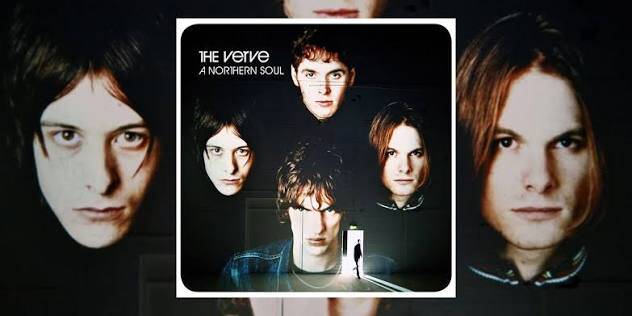
The album opens with ‘A New Decade’ and it is instantly clear that we are not dealing with the pop thrills of the brighter side of the nascent Britpop scene. Lyrically it involves the sort of brutal honesty that is sadly lacking in so much music. Ashcroft reveals all his demons and makes no attempt to hide behind carefullyconstructed and clever lyrical tricks - he simply lays himself bare and does so with an air of confidence that suggests he really doesn’t care what you, or anyone else, might think of him. A few years earlier this sort of song would have been wrapped up in jingling, jangling guitars and would have been sung by someonefor whom the description ‘fey and winsome’ would have been the only option. Not here though - instead the music swirls and swells, even roars at times and the vocals are forceful, wilful and assured.
The first record that I ever owned by The Verve was ‘This is Music’. I bought it as a CD single from HMV in the Wellgate Shopping Centre in Dundee when I should have been hawking Coca-Cola to shopkeepers on the Lochee Road. When I got back to my little Vauxhall Combo van, I put the single into the CDplayer and waited to hear what the fuss was all about. Three and a half minutes later I understood entirely.
A tambourine shakes and shimmies, a bass line that threatens to pulp your bones pulsates, a guitar howls with more rage than Ginsberg and then, once again, there is that voice, punching itself into your ears before it shatters your brain. The opening line is, perhaps, the final word on the British class system.
In a better world than this one ‘This is Music’ would sit at the top table along with the likes of ‘Live Forever’, ‘Girls and Boys’ and ‘Common People’ as one of the defining singles of the times and there’s no real reason why it doesn’t - or at least there is no good reason. It’s possibly too real, too serious, too heavy and too intense to capture the prevailing mood of the times but what it does capture is the righteous indignation of a band feverishly grabbing at their chance to be heard.
The second single from the album was ‘On Your Own’ a song that is a hymn to the pain of loneliness, an ode to the fragility and temporary nature of this thing we call life and a plea for someone or something to fill the hole in our soul.
At the risk of sounding ‘soft’, I cried the first time I listened to this.
I cried the second time too.
I’ve cried at other times when I’ve heard it.
I’m listening to it as I write this and I can feel the tears welling.
I’m not ashamed.
Sometimes I feel very lonely.
I worry about my place in this world.
I feel sure I’m not doing things right.
What if I’m not doing ‘husband’ right?
What if I’m not doing ‘dad’ right?
I’m all too familiar with the terrifying prospect of this life being all there is - of it being a fleeting series of moments that, if we get them wrong, can have terrible and terrifying consequences for others long after we have gone.
I’ve got to get rid of this hole inside.
You know, right?
It’s not just me.
I’m not alone of course.
I love.
I am loved.
It’s good to have a song that understands those moments of doubt, fear and worry. Good to feel that someone, somewhere, sometime has felt the same way and survived.
The third single from the album is ‘History’ which is a confident, fragile, swaggering, tender, heartbreaking and heartfelt song of love and the loss of love. It’s also a song that returns, again, to the transient nature of life and, indeed, love. Brothers and sisters, Richard Ashcroft is a poet and a lyricist to match any of the others that we place on pedestals and hail as geniuses. Or at least he was at this point.
‘A Northern Soul’ broke into the top twenty, peaking at number thirteen, and eventually went Gold. If ‘A Storm in Heaven’ had politely hinted this was a band who deserved to have attention paid to them, then ‘A Northern Soul’ put the niceties to one side and demanded you pay attention and then, when you had, ordered you to bend the knee in supplication.
The Verve were here.
Southpaw Grammar by Morrissey (28/8/95)
I have a theory about Britpop being defined by Morrissey’s nineties output…but I will spare you the details.
“Southpaw Grammar” is the best encapsulation of the sounds of Britpop that you are going to find. From the chirpy, and arch, delights of things like “Dagenham Dave” (complete with Britpop icon Terry Venables on the cover) and its nods to girls called Karen and Sharon, and the deliciously English “The Boy Racer” with its references to blokey behaviour at the urinals, this is Morrissey providing ironic commentary on where British pop was at in the mid-nineties. It also plumbs the dark depths of the era with things like “The Teachers are Afraid of the Pupils” and “Southpaw” …achingly beautiful and heartbreaking in equal measure.
With Boz Boorer and Alain Whyte you also had two of the finest musicians of the era, the men responsible for some of the most perfect moments not just in Morrissey’s career (yes, including The Smiths) but in British pop across the decade. People are easily distracted by the faces and string strumming figures of the “big boys”, but few of them come close to Whyte’s talent for creating perfect pop melodies, or Boorer’s wonky and ambitious outsider art pop.
This isn’t Mozzer’s best album of the decade…that honor probably goes to “Vauxhall and I” (although my favourite is “Your Arsenal), but this is his most Britpop album.
Lux by Thurman (02/10/95)
My adoration of Thurman is well known…in my house.
“Lux”, for me, embodies better than almost anything else from the era the charm and chutzpah of the era. Cups of tea, girls who like boys who like boys who like girls who look a bit like boys, pinching riffs from T-Rex, Bowie, Blur and goodness knows who else. It’s a wonderful and criminally overlooked album.
For me the best band never to make it were Thurman. They were a band with magpie eyes and who wore their influences on their sleeves…utterly unafraid to let the world know who they loved, who they were listening to and who they wanted to be.
Front man Nick Kenny told me, “Our influences at that time were The Who, Bowie, The Kinks and Bolan. I think we did wear our influences on our sleeves, certainly as much as any other band at that time did, but there was one song we recorded, “Loaded”, which was a bona fide steal! When we were recording our album, “Lux”, we would be listening to our contemporaries and spotting the steals they were doing, and we tried to out-steal them. It might not have been a great idea as the press used it as a stick to beat us with.”
One of the reasons why Thurman invoked the wrath of certain journalists at that time was because they hadn’t always been mod/glam Britpoppers Thurman. Brace yourselves kids because Thurman was at one point…METAL! 2Die4 were the band. I know right. The horror. Imagine playing different music and having changing tastes. The truth is, of course, that like all of us people in bands change.
“Oh, the indie press really hated us for it.” Nick said. “There was a massive snobbery that came from the NME and Melody Maker towards rock or metal bands at the time. In fact, there still is with many “alternative journalists”. Me and my brother Simon described ourselves as rock and roll culture junkies from a very early age.”
“Lux” arrived in 1995…peak Britpop…and with any sort of support at all it would have been massive. Sam Upton at Select magazine was a near lone voice in offering a fair and positive review of the album awarding it four stars out of five. Regarding influences vs plagiarism he had this to say; “…but as most bands today aren’t renowned for their high moral stance on plagiarism Thurman at least are in good company.” When one thinks of the pilfering by Elastica, menswe@r and The Verve to name just three it’s clear that there was an agenda at work by certain journalists who had decided that Thurman and their past didn’t pass their “authenticity” test.”
Disgraceful by Dubstar (09/10/95)
It deserves its place just for the artwork.
Sexual.
Innocent.
Rude.
Playful.
Erotic.
Funny.
Everything that pop music itself should be.
Crucially for a Britpop album it includes a reference to having a cup of tea too…so I don’t really know what else you want.
You want more?
“I’m starting to feel the monotony of a tower block”
“The post natal harmonies of youth”
“We’ll take our hearts outside, leave our lives behind”
The whole album is filled to the brim with arch, deliciously English, witty, romantic lyrical flourishes like those and they are accompanied by the sort of careful and curious hooks, loops and beats that dazzle.
Nuisance by Menswe@r (24/10/95)
Blaggers with attitude.
In the eyes of many Menswe@r are the reason why Britpop is easy to dismiss and even easier to despise. They see in Menswe@r the sort of artifice that makes them get all hot and bothered by fame hungry wannabes on shows like X-Factor.
When I say “many” I mean a certain type of real ale drinking, real music fan…dullards.
For the rest of us Menswe@r are a blast, a technicolour riot of joy and energy.
Oft derided by people who own all Led Zeppelin’s albums and who think that “Murder Most Foul” by Bob Dylan is worth giving nearly seventeen minutes of your life to. Just imagine that. Imagine giving SEVENTEEN minutes of your life to “Murder Most Foul” by Bob Dylan. Just think what you could do with those minutes. Loads of things. I could probably make love at least seventeen and a half times for starters. And have eight minutes left over for other things.
Menswe@r.
They had guitars.
They wrote their own songs (as if that matters).
They were on the front of the Melody Maker and not Smash Hits.
A “real” band.
And yet…the real music boys would not, will not, have it.
Large chunks of the music press had it in for them before they even began. Partly this was because they were seen as chancers, blaggers in the area, Good Mixer kids who had been handed a record deal on account of their shoes and haircuts and cheekbones. As if that is something to deride. Bowie had great shoes, wonderful haircuts and magnificent cheekbones…nobody would have paid any attention otherwise. Pop music isn’t about music. It’s about everything. The songs are only part of it…and even then, not the most important part of it.
Don’t.
I’m not interested in your long, painfully drawn out, carefully researched, dissertation on why The Beatles are better than Shampoo. They’re not.
The curious thing about Menswe@r was that they did have the songs. Their debut album “Nuisance” was loaded with five singles, four of which broke the top thirty, which was no mean feat in 1995/96. There was no Spotify or download chart at this point. If you liked a record you had to get up off of the sofa, put on your best Adidas, jump on the number 17 bus into town, walk to a record shop, pick the record of choice off of the shelf, take it to the surly bloke in a Fugazi t-shirt behind the counter, hand over your money, wait for him to stop laughing at your selection, walk back to the bus stop, wait fifteen minutes for the number 17, go home, put the record on the turntable…people went through that five times for Menswe@r. I’m prepared to bet that this is more effort than you made for your significant others last birthday.
The first single to be released from “Nuisance” was “I’ll Manage Somehow” which generated a level of anticipation that can only accurately be described as feverish. People were losing their minds weeks before they could own it. It was going to be limited to just a few copies and would, I seem to remember being assured by Record Collector, be worth about seven thousand pounds from the moment I left the shop with it. I bought two copies. One to keep for posterity and one to sell on ebay when it was invented.
The Sound of McAlmont and Butler by McAlmont and Butler (27/11/95)
We’ll get to that one.
Of course we will.
But “The Sound of…” is about so much more than one song, even if that one song is, arguably, one of the songs.
Following his departure from Suede it wasn’t clear exactly what Bernard Butler would do next or if indeed he would do anything next. Maybe he would be one of those shooting stars who blaze bright and brilliant across the Heavens of pop and then…disappear. Gone. Never forgotten but gone.
Bernard had other ideas though.
Chief among them was making the sort of music that would leave its mark on the soul of the listener…soul music. For soul music you need a soul singer.
Enter David McAlmont.
A great voice.
A great singer.
Maybe one of the singers.
There is no maybe, McAlmont is one of the singers. His is a voice that of such power, such tenderness, such delights that once heard you are incapable of forgetting or of ever really enjoying any other voices.
This was a marriage made in Heaven.
Here were eleven songs of such purity that clutching a copy at the Pearly Gates would be enough to see St. Peter grant you access to God’s right hand side regardless of what sins you had committed…and be honest, you’ve committed your fair share.
This is what it sounded like when Jesus told the woman caught in adultery to “Go” and “Sin no more”. Forgiveness and absolution in the form of pop and soul. Hallelujah.
Now let’s deal with it…
A slightly wonky guitar…the clic-clac of drumsticks counting down, drums gently pounding…and then something so achingly beautiful, so gloriously joyous, so magnificently uplifting and so sweetly soulful fills every corner of the store and of my being.
Strings swoop and soar…when Smokey sings, as we all know, you hear violins but when this played it was the whole orchestra. A genuine wall of sound of the sort that Phil Spector could only ever have imagined in his most fevered dreams. There is no other sound now, only this. Everything has stopped…conversations, movement, the traffic outside and the tumult of emotions inside.
All of this inside the first thirty seconds and before the voice arrives.
That voice.
The voice.
Choirs of angels contained within one Heavenly being.
“So you wanna know me now…”
He had me at “So”.
Rich, strong, delicate, rising and falling, sad and joyous, gospel wails, downtown yells.
There was nothing, no-one, else like this.
Forget Liam’s Lennon and Lydon rock ‘n’ roll animal.
Forget Damon’s Davies and Suggs tribute act.
Forget Brett’s Bowie and Ferry affectations.
This was the sound of a real singer.
Oh, I don’t mean to sound unpleasant…I love Liam and Damon and Brett, each of them has brought me more happiness than I could ever explain to you…but McAlmont sounded like one of the greats; Marvin, Smokey, Stevie, Diana, Aretha and, at the same time, he sounded like nobody but David McAlmont.
This was “Yes”, the first fruits of the union of Bernard Butler and David McAlmont since each had split, in less than amicable ways, with their previous musical partners; Suede and Thieves. Who would have thought that between them they would release one of the greatest singles by a British act ever.
Volcanoes by Tiny Monroe (1996)
Oh, Tiny Monroe.
How do I love thee?
Too many ways to count.
I bought the debut single “VHF 855V” on the day of release. I have no idea why. Maybe a review in the Melody Maker or the NME? Whatever the reason it remains one of my most treasured musical purchases. There was something very “other” about Tiny Monroe. On the Instagram account dedicated to them it says…
“Tiny Monroe brought a cinematic shimmer to the Britpop era, mixing new-wave cool with glitter-soaked swagger.”
I mean.
Who doesn’t think that sounds bloody wonderful?
Entirely accurate too.
Lumped in with the hideously named “female fronted band” thing they were simply a wonderful band. The album probably arrived a little too late to have the sort of impact it deserved. By 1996 while “Britpop” was still limping along, the truth is that attention was turning to other places.
I still harbor hopes of a reunion…
This World and Body by Marion (05/02/96)
“This World and Body” sounds as fresh, as troubling, as comforting, as dark, as thrilling and as wonderful as it did in February of 1996. In Jaime Harding Marion had someone who was a troubled soul…not someone who was portraying a troubled soul. Fortunately trouble loved him and blessed him with the ability to write the sort of terrifyingly honest lyrics that reach out to the grotesquely lonely and bring them comfort and joy.
It would be early 1996 before the debut album “This World and Body” finally arrived. The question was, of course, would it be worth the wait? The answer, of course, was yes. It had been obvious from the singles and live shows that Marion was a band where each member had put the hours in, no blaggers, no part-timers, nobody in just because they looked the part. Listening to the album three things leap out at you; Jaime is a fine singer and songwriter, Phil Cunningham is a fabulous guitarist, and the rhythm section were much more than bodies in the studio. The fact that the album reached the top ten in its first week of release proves that there was “something” about Marion.
The songs are filled with desire, longing, angst, passion, rage, love and death. The guitars swoop and slide. The bass rolls and rumbles. The voice soars, yelps, whispers, sighs and screams. The drums beat, pound and rattle your bones. The singles “Sleep”, “Let’s All Go Together”, “Toys for Boys” and “Time” were all present and correct, only “Violent Men” was absent. The truth of the matter is that there were at least another three songs that could have been singles; “Fallen Through”, “The Only Way” (which did get a release on a Club Spangle E.P) and “I Stopped Dancing” are all songs that would make a “Best of…” compilation for dozens of other better known and more successful acts.
“The band is something we all need to do. When I write, I write lyrics that deal with emotions and I channel all my emotions into songs. Without it I would be a sad-arse like I was before Marion gave me the opportunity of doing this full-time for the rest of my life.”
(Jaime Harding, RAW, 1996)
The promotion for “This World and Body” included nearly eighteen months of touring. Up and down the UK, the States and Europe. Solo shows. Support slots. Festivals. For people in the crowd the live performance looks like the best job in the world, hundreds of adoring fans, people dancing and singing to the songs you’ve written, posters on the wall, autographs…glamorous. What do you do for the other 23 hours when you are not on stage or when you don’t have a show at all? For many people in bands the answer is, often tragically, drugs. Lots of drugs. Then more drugs.
“Then I started doing way too many drugs – the wrong drugs. I’d always used speed and cocaine but the heroin really took hold round the making of The Program. Johnny hated it because he’d dealt with that part of his life a long time ago. We were supposed to get Chrissie Hynde in for backing vocals but she’d had bandmates who’d died from drug use and she’d have been disgusted. Johnny and the band, and Joe, stuck by me for way longer than they should have. But by the time the record was finished, I was good for nothing.”
“I was good for nothing.”
The great tragedy of the Marion story is that a kid broken by childhood trauma couldn’t escape it, that the people around him couldn’t (maybe wouldn’t) step in and do…something. But maybe there was nothing that could be done? Whatever. But Jaime wasn’t “good for nothing”. Far from it.
Lovelife by Lush (05/03/96)
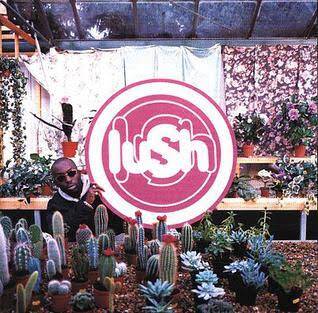
A curiosity in the best possible way.
Following on from their previous work which saw them lumped in, thrust into, the heart of whatever the Hell “shoegaze” was Lush, like Ride, would ultimately reveal themselves to be bigger, bolder and more extrovert than the floppy fringes and battered Doctor Martens of that scene.
“Lovelife” revealed a band who could preserve their artistic integrity while embracing a broader, more open and, whisper it, more pop(ular) sound. It is difficult to believe that when one hears “Single Girl”, for example, that it is the same band who had released the dark, dense and brooding “Scars” EP back in 1990. But this is the mark of a great band…evolving, moving, experimenting and revealing something new with each step.
Despite the enormous success of “Lovelife” it proved to be the end for the band (save for a brief return to say farewell in 2015) and fans of Miki Berenyi have had to turn her latest musical project Piroshka for a hit of her special magic.
The Sun is Often Out by Longpigs (29/04/96)
We asked 100 people to name their favourite album of the nineties.
“The Sun is Often Out” by the Longpigs, Les?
If it’s up there, I’ll give you the money myself. Our survey said…96!
“Told you Les! I bloody told you.”
The thing is, if you ask the right sort of person what their favourite album of the nineties was then they very often, not always, say that this is it. The people who don’t choose it probably haven’t heard it.
One day, as I walked towards the entrance to my circle of the inferno that was the University of Paisley in 1996, heading for a “tutorial” with a woman who was Hell bent on ruining what was left of me I entered the Salvation Army store. A sale was taking place. Everything was a pound. My monastic student lifestyle meant that I had a pound. More than that. Not much more. There on the rails was a blue, wool, three-quarter length, duffle coat. I fell deep in love. Maybe I had seen Steven Pastel wear one…or Mark Morriss…or some other indier than thou, too cool for school, hipster cat. I tried it on and it fitted. I handed over my pound and felt excited about the possibilities afforded by this garment.
It was a false dawn; there were no clothes I could buy that would make me feel like myself. I was too awkward to even pass for someone else. It was just a coat. Not shabby enough for shabby chic. I wasn’t the Byres Road or Carnaby Street. I was just what I had always been, Kirkcaldy High Street. I had imagined a Mr Ben style transformation and had to settle for Mr Bean.
I came to university alone.
I went home on my own.
I cried.
I talked to myself because there was noone I could talk to like I talked to myself.
This was like an eternal winter of discontent and the only time the sun was out, which wasn’t often was when “The Sun Was Often Out”.
1977 by Ash (06/05/96)
A riot.
Of melody.
Of attitude.
Of rock ‘n’ roll.
Of teenage emotion.
Of pop masquerading as everything but.
This was the sound of youth delivered at one hundred miles an hour for fifty minutes and twenty four seconds.
I remember the bitterness, resentment and fury that Ash made me feel when I first saw them; they were everything I thought I should be but wasn’t. Younger, more talented and more successful than I was and, more worrying, than I ever could have been. I know it now…and I knew it then. There is a name for that sort of bitterness, resentment and fury; jealousy.
I’ve moved on.
I have reached acceptance.
Ahem.
Fuzzy Logic by Super Furry Animals (20/05/96)
Well, this is awkward.
Like Luke Haines of The Auteurs it is safe to say that SFA were not what you would call fans of Britpop. In a 2008 Uncut article they described the whole thing as “…a conservative, backwards movement in music”.
Whisper it but…in very many ways they were right.
Too much of what is talked about by people when the tag of Britpop is bandied about is conservative, backwards looking and, frankly, a bit boring. Safe. Vanilla. Not Vanilla Ice…sadly. That isn’t what Britpop was.
Ironically the Furries ended up making a rip-roaring, foot-stomping, tub-thumping, hoary old seventies rock album which was laced through with psychedelia, glam and the sort of drug soaked nonsense that was the preserve of most prog-rock acts.
“Something 4 The Weekend” has become a Britpop anthem, guaranteed to fill the floor of any indie night anywhere in the world and much cherished by the likes of me. It’s the same story with “God! Show Me Magic”…can we take a moment to cherish that exclamation mark?
That the band were able to go on and stretch themselves creatively in ways that many of their peers couldn’t have dared to dream of is testament to just how magnificent they are.
Love and Other Demons by Strangelove (17/06/96)
I am not what you could call a happy person.
I’m not unhappy about that.
It is who I am.
Happily unhappy.
During one particularly violent and ugly bout of unhappy I could find solace only in “Love and Other Demons”. It was the sound of my pain, my heartbreak and my hopelessness. Now it serves as a reminder of where I have been, who I have been and how a stranger was able to bring comfort and hope.
If there is a God I hope he showers blessings onto the head of Patrick Duff.
Strangelove were Bristol’s contribution to Britpop. Except they were never really Britpop…they were something…else. Something other. Alongside the likes of Marion, Elcka and Mansun they presented an alternative vision of what British pop was; eccentric, outsider art, edgy, troubled and yet still wedded to the notion of motion and emotion in the music.
Melody makers each one.
Soundtracks to the lives of others.
“Get in the car, you’re going to be a pop star.”
(David Francolini to Patrick Duff in 1991)
After David Francolini bundled Duff into the back of his car they headed to an attic room rehearsal space and recorded their first song. Less than a year later Strangelove released the “Visionary E.P”. A collection of four songs that sounded exactly like…well, that was the thing, they didn’t sound like anything or anyone else. They were gothic without being goth, they were grand and yet intimate, they were bold but delicate. The only thing they sounded like was Strangelove and, at that point, nobody knew who, or what, that was…
You must understand that “Love and Other Demons” is a collection of songs that are so beautiful, so full of love, so broken, so charged and so emotionally brutal that just one listen is enough to leave you gasping for air.
I spent a lot of time up to the point of this albums release trying to convince myself that only Morrissey understood me…the truth is that I was trying to make myself fit the life that Morrissey was singing about. When I heard these songs, when I heard those lines, I realized that the person singing in them did understand me…the real me. What Strangelove did was blow away the affectation and pierce the very heart of me. I listened to it repeatedly. Each time it had the same effect. It’s the same now.
Beautiful Freak by Eels (13/08/96)
Did you hear that?
That was the sound of a large chunk of the Britpop community online combusting with rage.
“EELS” they are shrieking into the vast nothingness of their own souls.
“EELS! FROM ***ugh*** AMERICA?” they are wailing into the space between their ears, as if a postcode or a passport is required to be included in a list of Britpop albums.
Britpop, despite the best efforts of both The Quietus and The Guardian, wasn’t about being British…not in relation to where you happened to have been born. It was as much about aesthetics, inspirations and attitudes as it was to how close you had been born to the sound of the Bow Bells.
Don’t like it?
Write your own list.
“Beautiful Freak” deserves its place here because it was inspired by so many of the things that inspired the bands that inspired so many of the bands here…nods to jazz, Gladys Knight and Al Green; the sorts of movers and groovers who the original Mods and glam brigade really dug.
It sits happily alongside the likes of Strangelove and Marion as the “other side” of Britpop. Something more vulnerable, more honest and more creative than the meat and one potato of the likes of Northern Uproar.
Deal with it.
Dig Your Own Hole by The Chemical Brothers (07/04/97)
Dance music was firmly cemented as a constituent part of the world of rock ‘n’ roll by 1997 and the kids who really got what was going on in nineties Britain (including musicians) were able to thrill to the madness of the Chemical Brothers and The Prodigy just as easily as they could to the likes of Ocean Colour Scene.
It isn’t possible to label yourself a Mod or an “indie kid” and reject things like Dig Your Own Hole…this was modern and independent in ways that b-sides by The Verve could never hope to be. It was also, crucially, the perfect soundtrack for getting off it or on one and dancing until your limbs dropped off…apparently.
Catholic Guilt by Edward Ball (05/05/97)
“The Mill Hill Self-Hate Club” is the best song of the era that you haven’t heard. While the world was trying to convince itself that “Be Here Now” was worth listening to (it wasn’t), Ed Ball dropped just another gem in his long history of pop brilliance. From the Television Personalities, The Times, and various other projects, Ball has been writing and recording peculiar, catchy, literate, intelligent, and often funny, nuggets of British pop for a long time. That he isn’t a household name says more about the public and their willingness to consume whatever slop the media delivers to them than it does about his enormous talent.
It Doesn’t Matter Anymore by The Supernaturals (05/05/97)
During the Britpop years there were a handful of hardy Scottish souls who could be tossed into the scene…The Gyres, Whiteout, Geneva, Bis, and maybe even Travis (for at least one album) were all part of the scene. One other band also appeared at this point and contributed one of the toppermost and poppermost albums of the entire era. That band were The Supernaturals and they were ace.
Lead singer and guitarist James McColl had been influenced by all the right sorts of bands before forming The Supernaturals in 1991. “For me it was those 60’s and 70’s bands like The Monkees, The Move, Slade, Madness, Blondie and The Police. As far as the band was concerned though it was bands like The Cardigans, Teenage Fanclub, The Replacements, Fountains of Wayne, and a LOT of the Britpop bands; Dodgy, Boo Radleys, blur, Oasis and so on. At that time those bands would put out records, and everyone would buy them, share them and we’d take bits of them!”
“It Doesn’t Matter Anymore” arrived in 1997 - 12 bona fide, solid gold, authentic, genuine pop songs that had your fingers snappin’ and your heart jumping into your mouth. From the sublime “I Don’t Think So” to the ridiculously brilliant “Stammer”, this was an album that refused to let you hit skip or fast forward…you couldn’t because every song was the equal of the one before it and the one after too. It’s an album that plays like a greatest hits collection.
At The Club by Kenickie (12/05/97)
It is easy, too easy, to focus on the giddy, brash, outrageous and fierce thrills and spills of things like “Come Out 2 Nite”, “Punka” and “”In Your Car” when you look back on Kenickie. The press made much of their “punk” credentials and their youthful arrogance. But, as ever, the truth is a bit more complicated. Kenickie were not some female fronted Northern Menswe@r; blaggers with attitude (that’s a positive by the way) and they were much more complex and nuanced than you might remember.
To my cloth ears the real heart and soul of Kenickie lies in “Robot Song”, a slice of electronica, a nod to New Order, a dark, gothic, hymn to obsessive love. It suggests that beneath the juvenescence and giddy rush of the hits were gentlepersons with old souls and serious ambitions.
Further by Geneva (09/06/97)
I am in my bedsit in Johnstone.
A bedroom with stacks of NME and Melody Maker littering the floor.
On the walls, centrefolds from “Loaded” because I thought that was what it meant to be a man.
New lad.
All surface.
No feeling.
Then “Further”…
“Cast me adrift on a dream”
“Take me away from this place”
That was what I wanted.
A yearning to be somewhere, anywhere, else.
A burning to be someone, anyone, else.
I wanted a dream.
Not the dream that I was having.
An awful repetitive, recurring, nightmare where a single shiny pin was in my mouth and each time I tried to remove, retrieve, it…it multiplied, repeatedly, until my mouth was filled with pins.
Take it away Mr Freud.
Not just songs.
Music.
Emotions.
Feelings.
Hymns for the living dead.
“Don’t be too harsh, life is too much.”
It’s easy to judge.
Easier still to laugh.
It takes guts to be gentle and kind.
For some life really is, at least in moments, too much.
We don’t need to cheer up.
We don’t need to pick ourselves up.
Who knows what we need.
Broken souls.
Unfinished.
Wings that are temporary…we can take flight, but the crash is inevitable.
“On a day like today, nothing gets better, come what may…I could just disappear, into the blue.”
“Have you ever had suicidal thoughts?” the doctor asked me the other day as I sat weeping in her room trying to explain where I was.
“No. But sometimes…I would like to disappear.”
Then “Into the Blue” started playing in my head.
Or in my heart.
“I’ve watched you turning into something, something I could do without…”
That is the greatest fear.
That people will see you for who you really are…warts and all.
They will watch as you reveal the truth…
Then they will realise they could do without.
Agony.
These are universal feelings.
These are ever present emotions.
The grotesque of the everyday.
The loneliness that lies around the corner.
Geneva captured all of that.
Geneva captured all of this.
Work, Lovelife, Miscellaneous by David Devant and His Spirit Wife (16/06/97)
Dig the new art-rock breed.
Ditching the narrow boundaries of Britpop and embracing the joys of performance and conceptual art “The Vessel” (Mikey Georgeson) gathered a gaggle of like minded Situationists and surrealists around him to craft the sort of wonky pop that only the genuinely gifted can ever manage.
Wigs.
Make-up.
Kettles.
Melodies.
David Devant and His Spirit Wife had it all…and so much more besides.
I had a feeling that maybe this was something more than pop music.
I don’t know if I can say it.
People come over all peculiar when you say it.
I have to say it.
This was pop as art.
Pop-art.
Art-pop.
Pop made by an artist.
Or art made by a popist.
It was, I think, high-brow masquerading as low-brow.
Or maybe it was low-brow masquerading as high-brow.
Or it was all a bit of a lark?
A situationist prank wrapped up in a situation comedy about a pop band?
I may be overthinking.
Or not thinking enough.
“He is a dead conjurer. She is representative of your spirit wife, my spirit wife. She is the inner muse who sends us a tingle down our spine. We want to become icons and, musically, we are just about the history of pop music.”
(The Vessel, Channel 5, 1997)
That is how Mikey Georgeson attempted to explain David Devant and His Spirit Wife to Jonathan Coleman.
Dead conjurers.
Spirit wives.
Muses.
History.
To Jonathan Coleman.
It takes a certain type of confidence, or madness, to use a magazine feature on national television to sell your art-pop/pop-art vision like that.
“Work, Lovelife, Miscellaneous” is one of the finest collections of art masquerading as pop as you are ever likely to hear.
So there.
The Fat of the Land by The Prodigy (30/06/97)
Some people will try and tell you that Britpop was retro, that it was all “Austin Powers” sixties revivalism, that the music was made by boys with guitars and that if you didn’t have a polka dot shirt and a pair of Gazelles that you weren’t doing “it” properly.
You can spot those people easily…they are wearing a polka dot shirt, a pair of Gazelles and are stood at the bar telling everyone that “real” music is all about Beatles worshipping, Weller hair and boys with guitars.
For the rest of us, lets call us “normal”, the nineties and Britpop was as much about the present and the future as it was turning to the past. Of course there was a “uniform” and lots of us who were there at the time fell into the idea that we were involved in some sort of Mod revivalism. But anyone who tells you that when they went to clubs in the nineties they were listening to four hours of Britpop “bangers” is, to be blunt, a liar.
Most of the “indie” club nights (ask your granddad youngsters) didn’t have enough records by Britpop bands to fill an hour in ’93 and ’94 unless they played “Modern Life is Rubbish” all the way through. Instead the dancefloor moved to the sounds of sixties soul, eighties indie, Madchester and, crucially, dance music.
Enter The Prodigy.
Their “Music for the Jilted Generation” had arrived in 1994 and had terrified indie kids and ravers in equal measure. A demon mess of contemporary dance culture and punk rock attitude. Keith Flint was more John Lydon than superstar DJ. But it was “The Fat of the Land” that elevated them from underground noiseniks to mainstream stars.
At V97 they played the main stage on the same day as the likes of Britpop luminaries Gene, The Bluetones, Geneva and more. While that day was a bloody dream for kids like me in their Fred Perry shirts and Ellesse trainers it was the sight and sound of The Prodigy that left the most lasting of marks on our minds, hearts and souls.
For all the wonders of “Rock ‘n’ Roll Star” or “Chemical World” the real rock ‘n’ roll stars were The Prodigy and the real chemical world was taking place under the bright stars of the likes of “Breathe” and “Diesel Power” and “Firestarter” and…
When I Was Born for the 7th Time by Cornershop (08/09/97)
Of course, you know that one.
Everyone loves that one.
Curiously some of the other earworm hits of the Britpop period like “Alright”, “Country House” and “Wake Up Boo” are almost unbearable now, the sort of things that have become scarred by overplay or, as is the case particularly with “Country House”, being utterly rubbish.
But not “Brimful of Asha”.
Of course the version that propelled them into the top ten isn’t the one that features here, this version is a more authentic, less synthetic, slice of folksy, soul, wonder.
Anyway.
There’s more to Cornershop than that.
“When I was Born…” includes songs that are knowing nods to pop history like the sitar soaked “Norwegian Wood”, songs that are groovy and funky in equal parts like “Sleep On The Left Side” and it also includes one of the greatest songs of the nineties in the shape of “It’s Good To Be On the Road Back Home Again”, a glorious celebration of the sweet and tender heart of country and a beautiful snapshot of love lost…or something.
What Cornershop also have is a, seemingly, encyclopedic knowledge and appreciation of everything that is good in pop music history, specifically in the history of English pop and roll. They have taken that knowledge and smooshed it up close with Asian culture and music to create something that can only be described as…unique?
You try and put a label on it.
Describe the sound of Cornershop.
Pop them in a category.
Tag them.
It is impossible.
On a single album you can hear Robert Plant, glam rock, electropop, sitar, country, dance, funk and goodness only knows what else.
Rubbernecking by Elcka (27/10/97)
Beautifully dressed and handsome as Hell, Elcka should have been massive based on those two factors alone. The fact that they had the tunes to back up the image makes their status as one of the “lost” acts of the nineties music scene baffling and frustrating in equal measure. The problem for them was the fact that by October 1997 the tide was turning against anything remotely linked with Britpop. The press were turning on previous darlings, the big hitters were, even more, violently disassociating themselves with the scene and the labels were looking for something…else.
There was another problem for Elcka and that was the fact that they were more arch, more knowing, darker and less frivolous than some of the rot that was, belatedly, attempting to cash in on the tag of Britpop. While so many other British bands were still harping on about the bloody Jam and Madness Elcka were rooted in the darker edges of music, perhaps most obviously The Cure. They were gloriously gothic without ever being Goths.
A curiosity for the curious.
Add comment
Comments